A duel of the niche
Idea, characters, generation and edit
- Script and shot list
- Characters and looks
- Locations
- Video generation
- Edit and sound
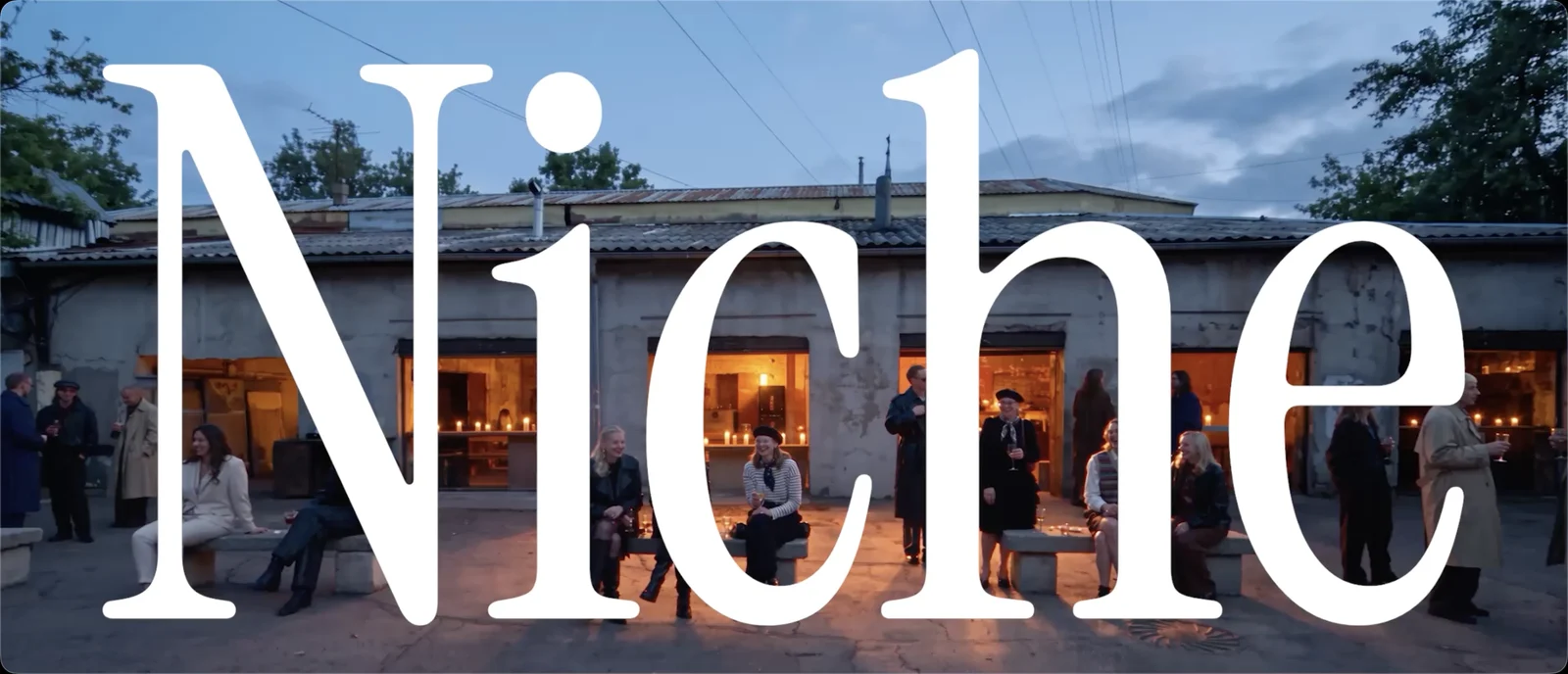
An introductory piece for the Higgsfield AI team: a short film about people for whom the main thing is not being like everyone else. Two niche types catch each other’s eye in a bar and set out to find who’s more niche. The whole film was made on the Higgsfield platform, from the first character to the last frame; below I break down how it came together.
01
The film, frame by frame
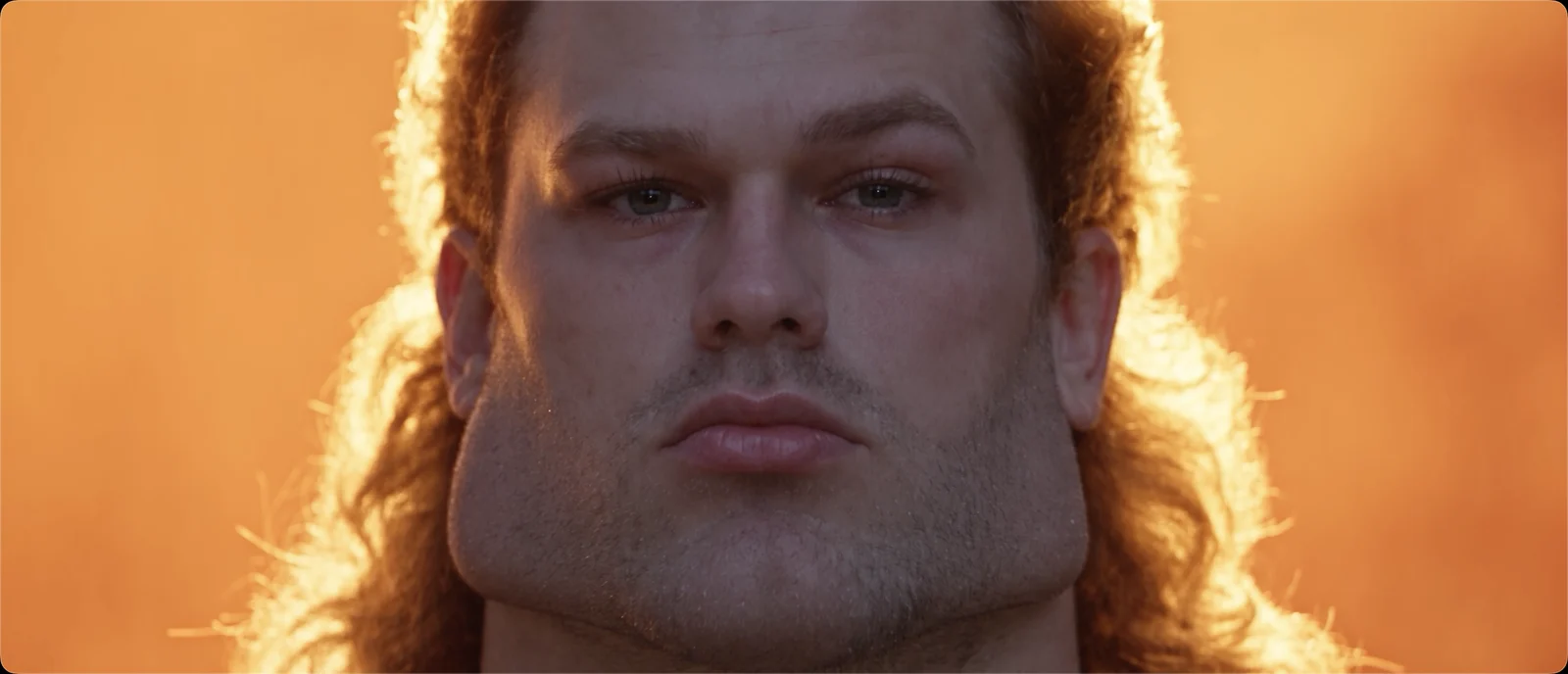
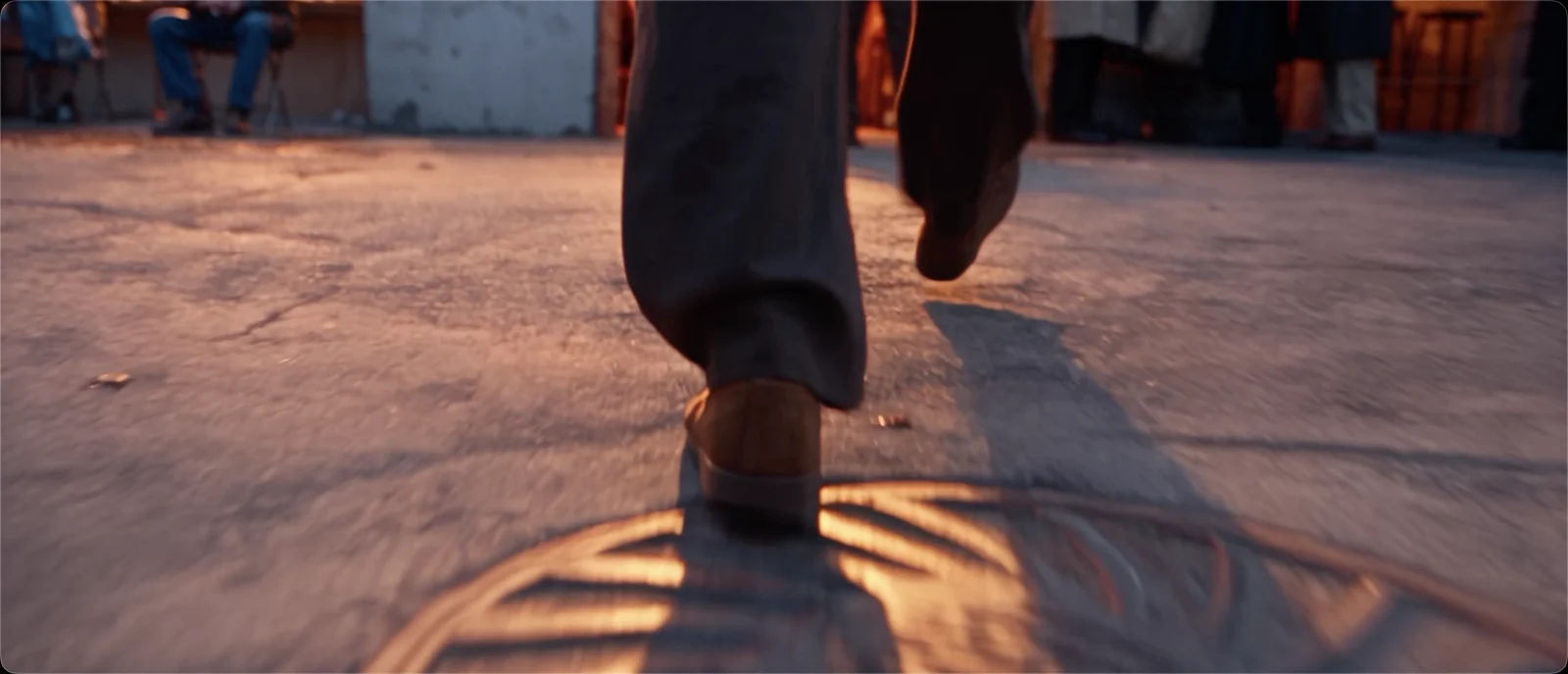
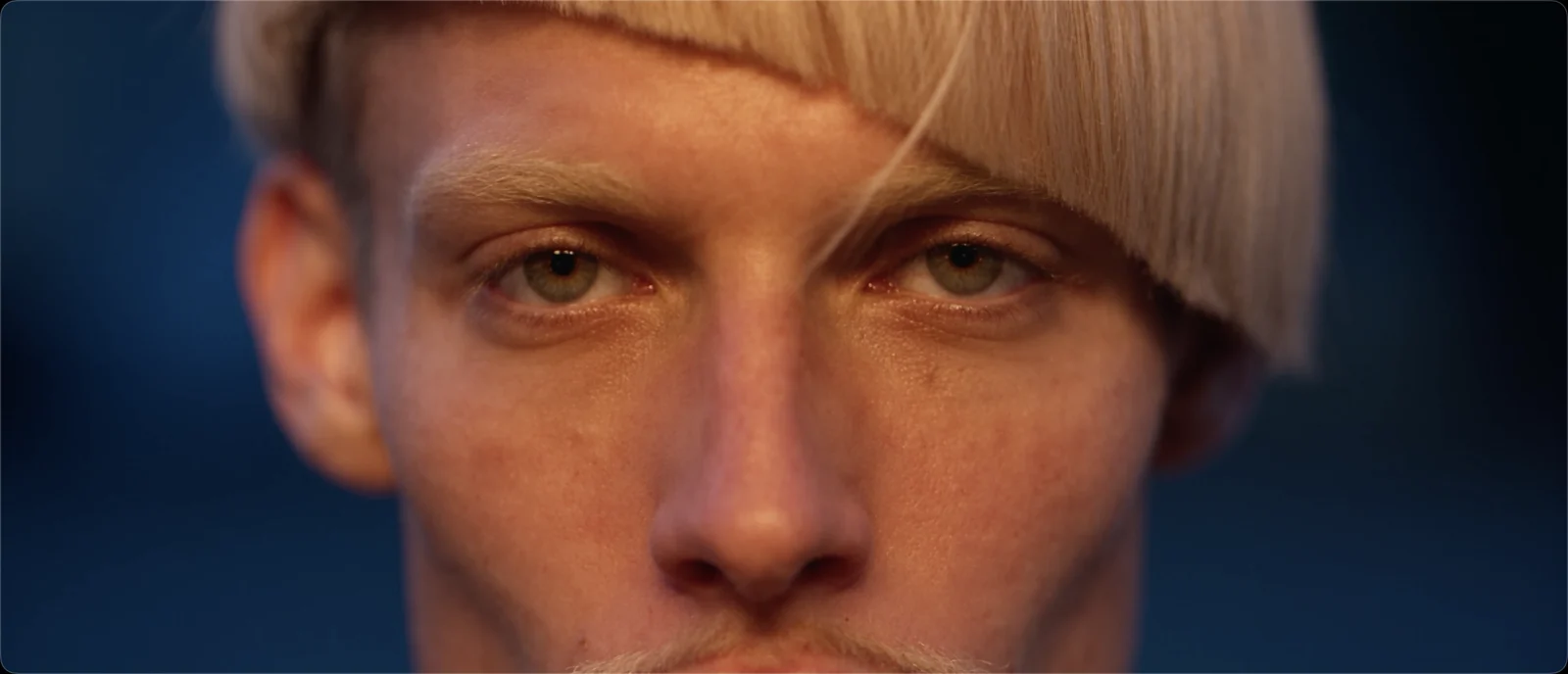
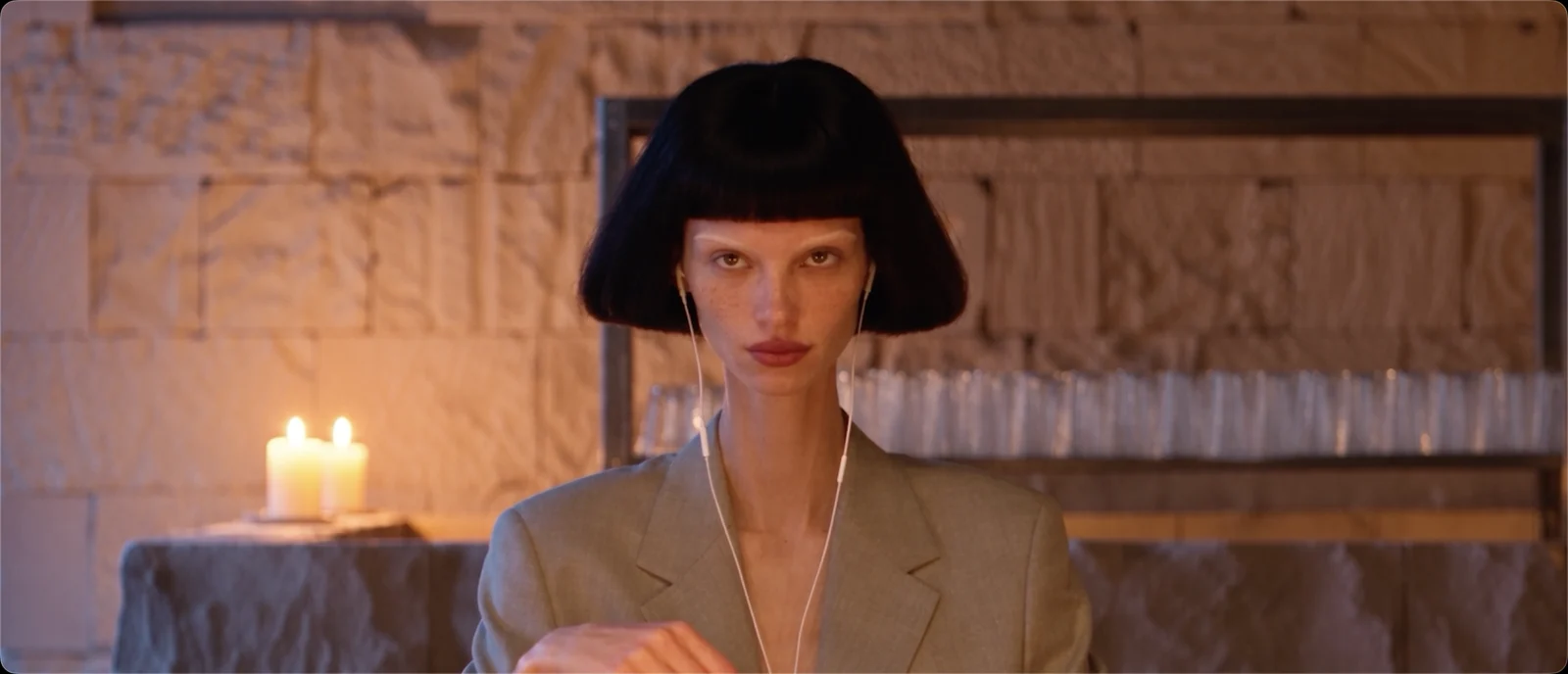
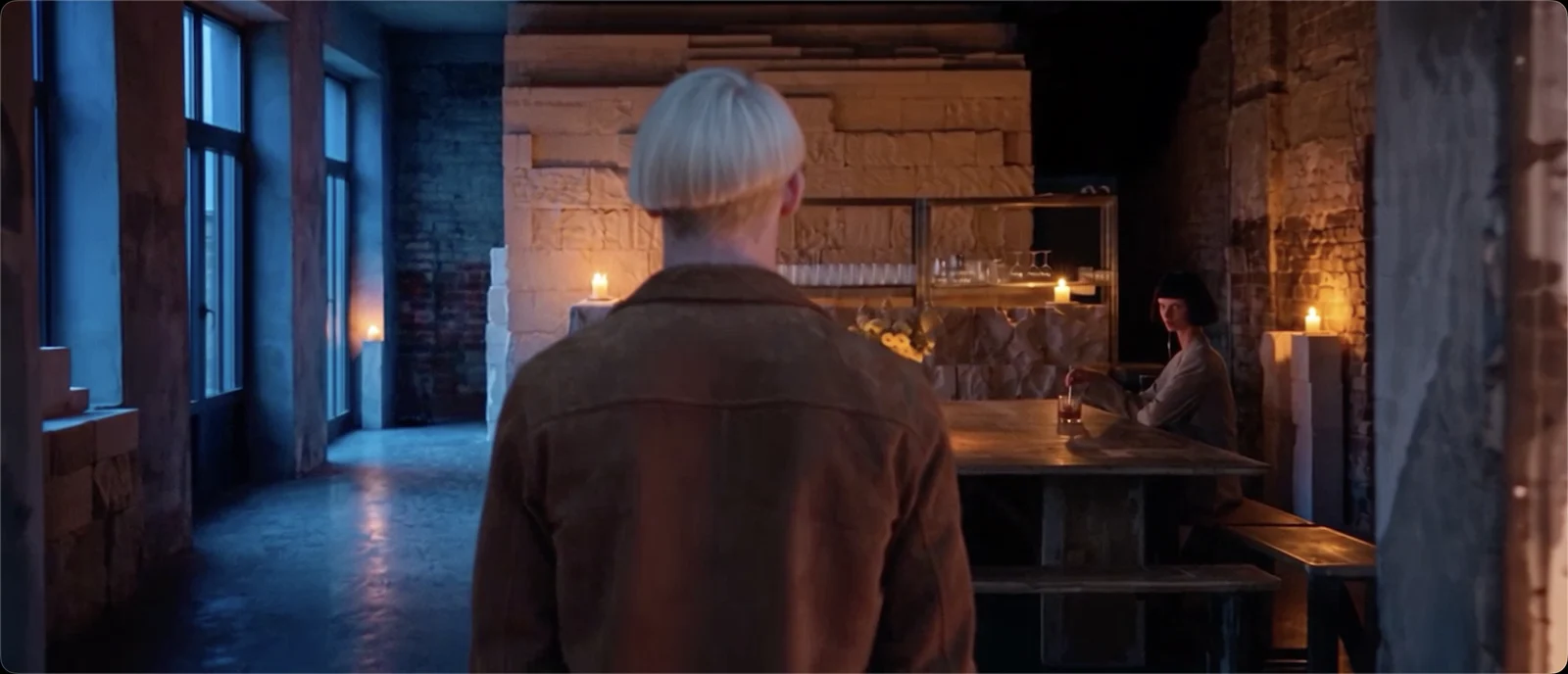
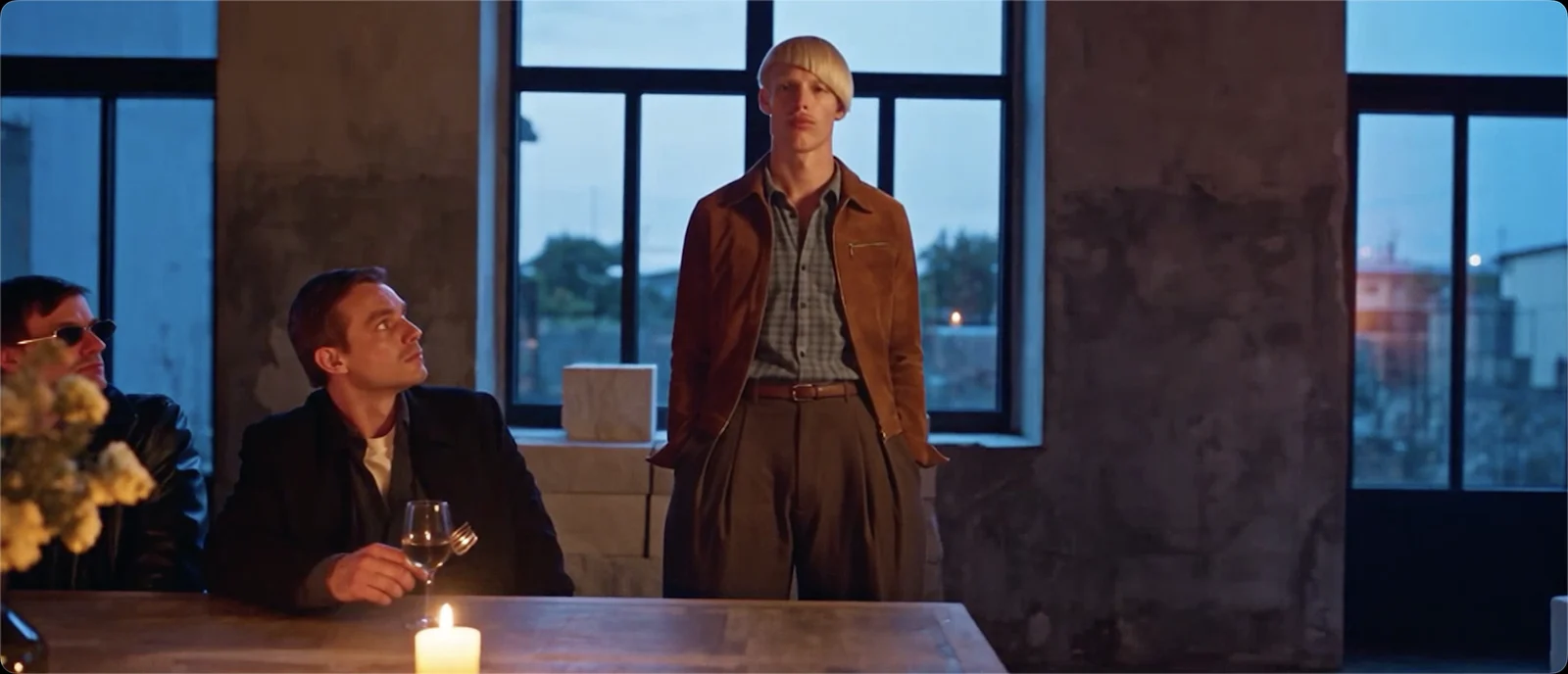
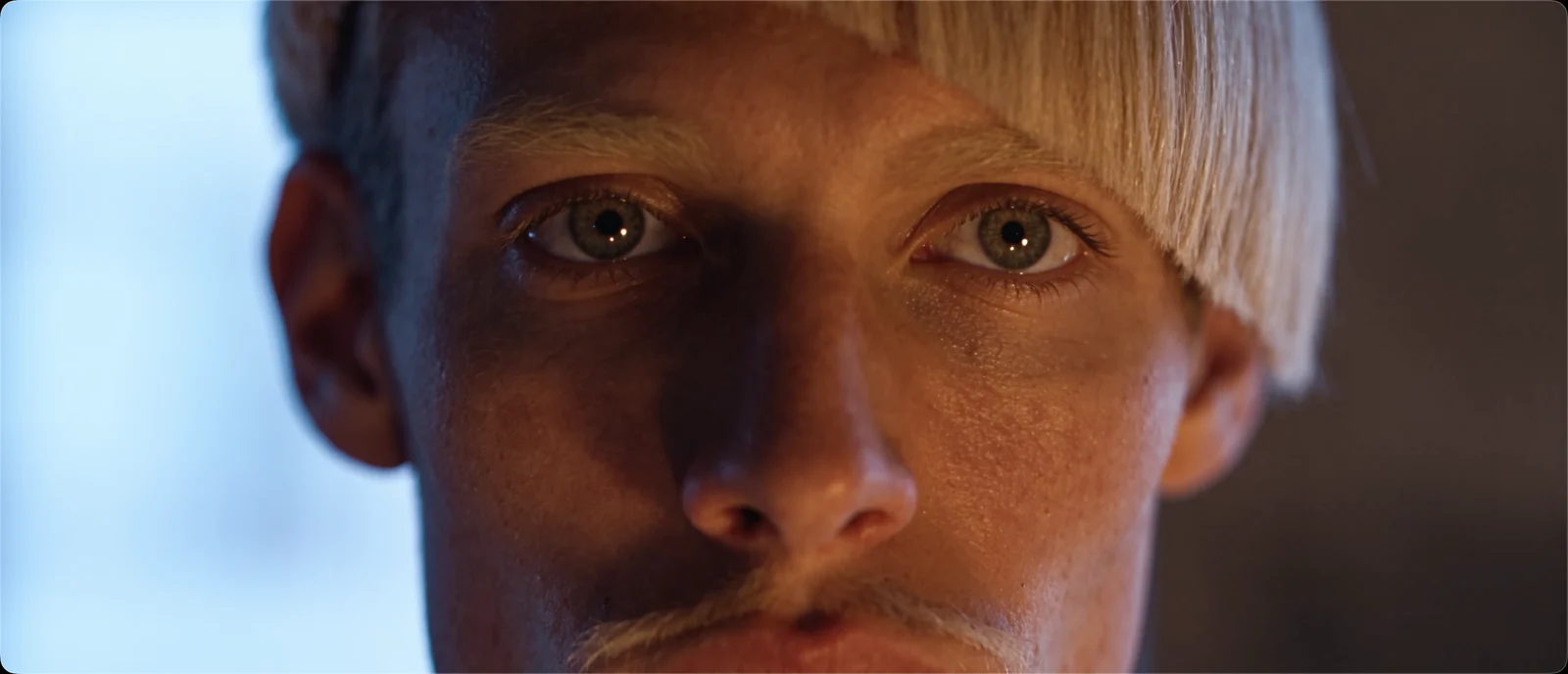
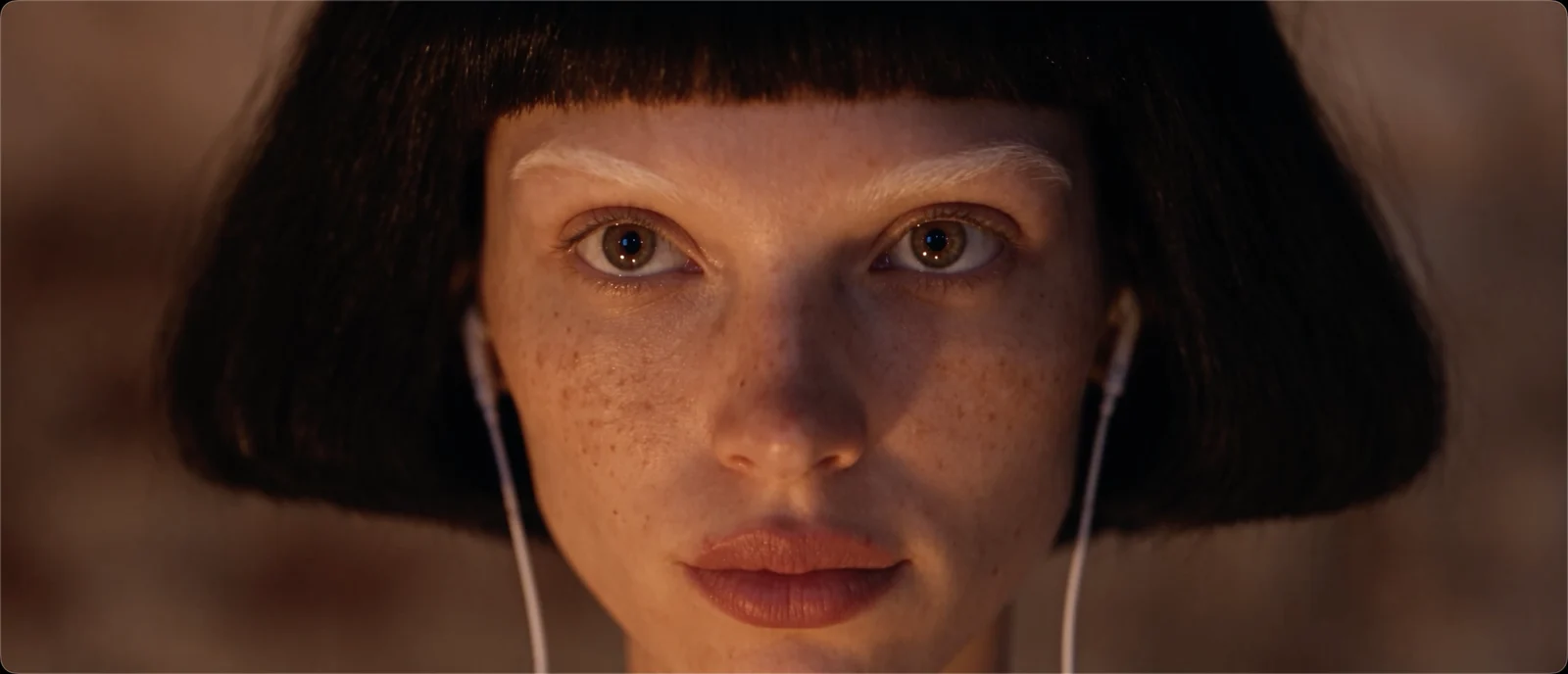
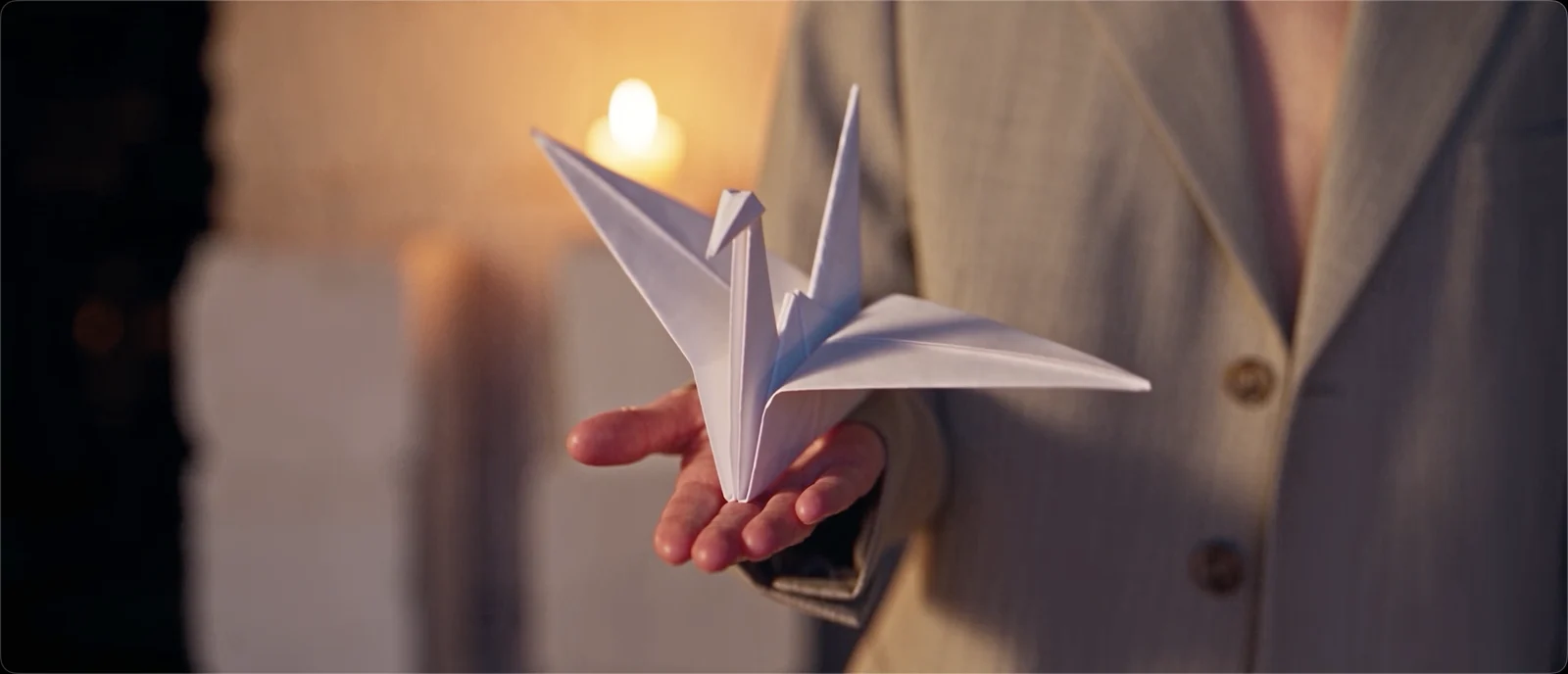
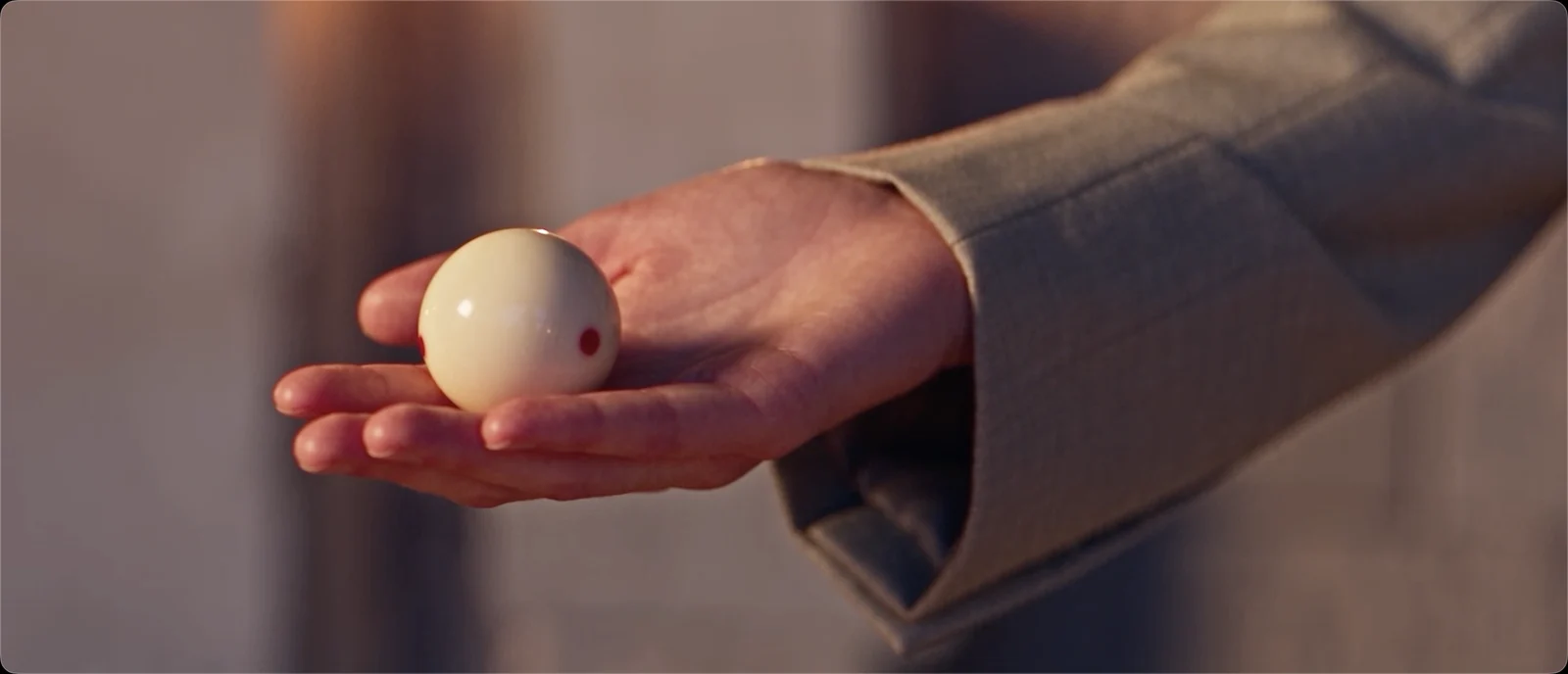
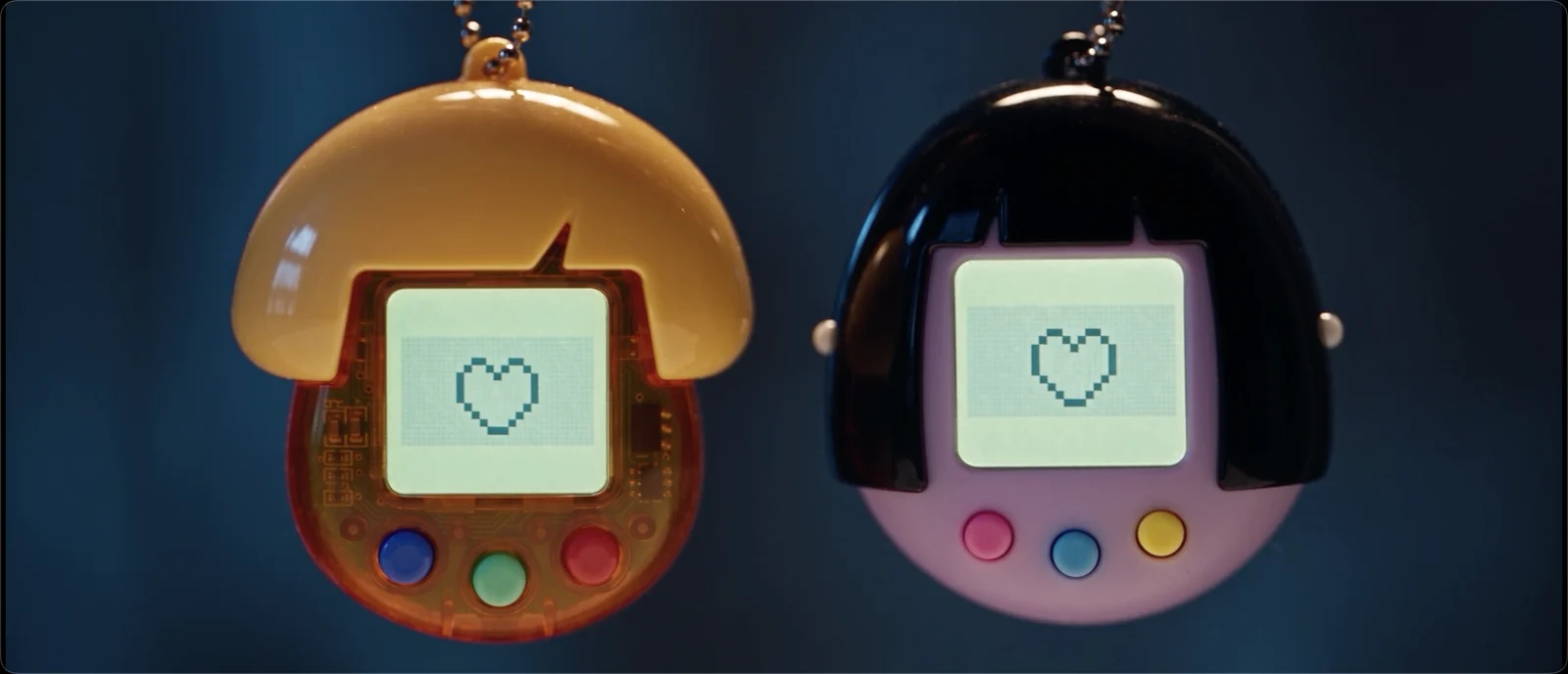
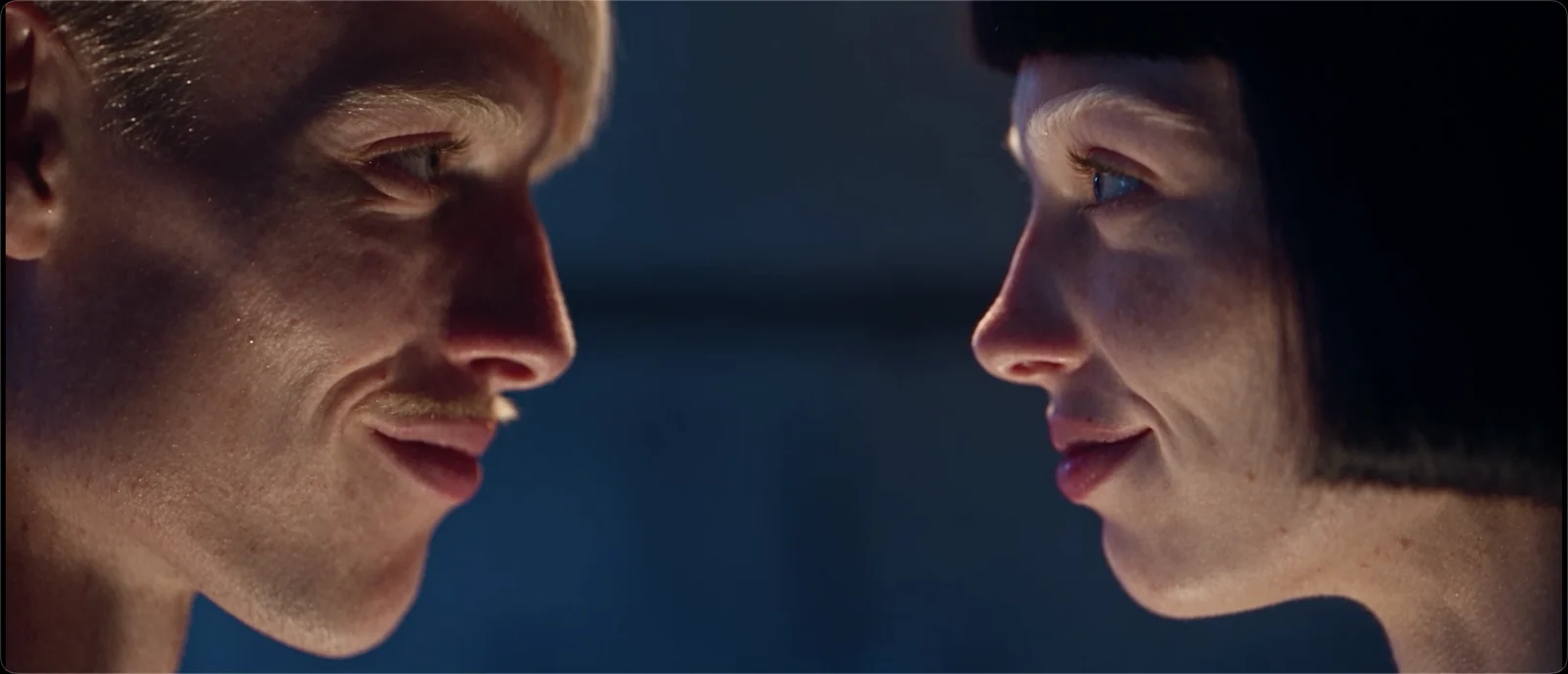
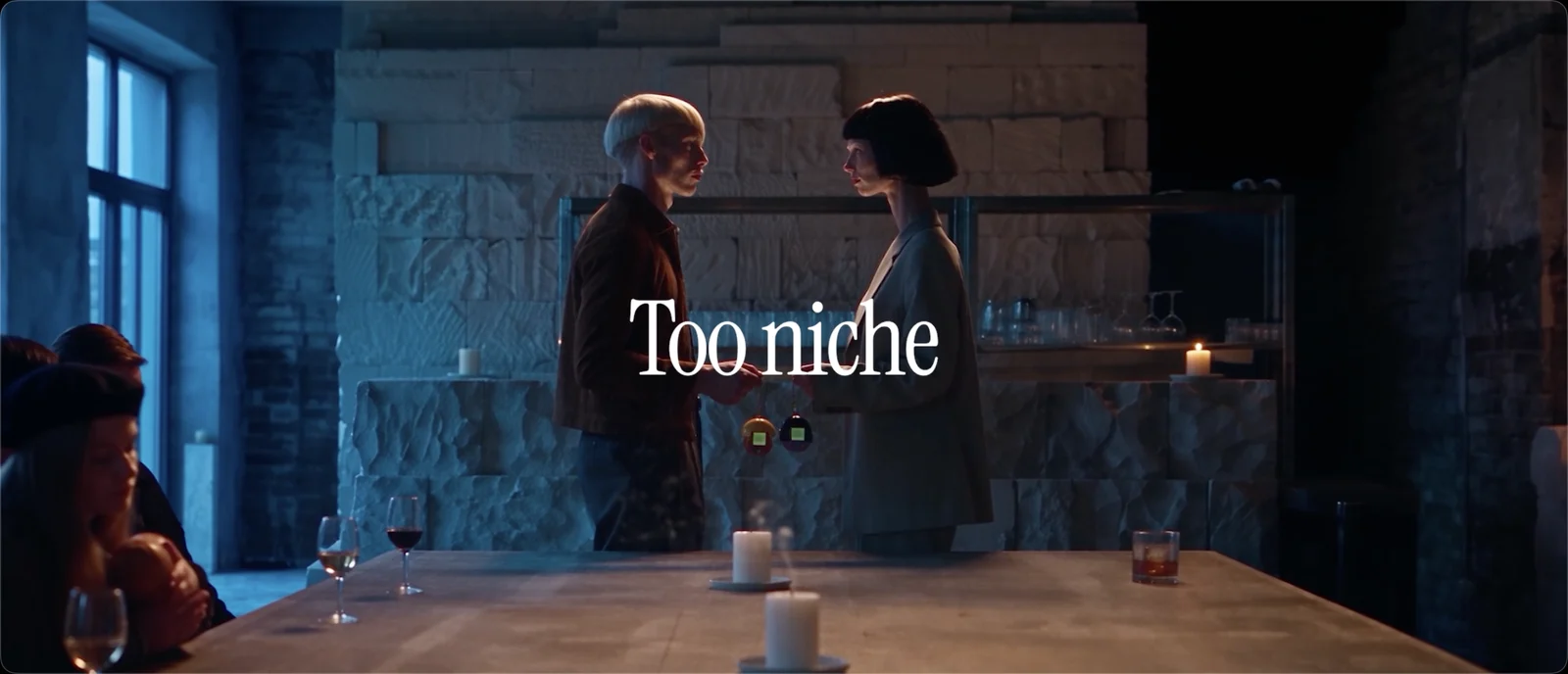
The story runs in five acts: getting past the doorman, a chance meeting of eyes, the staredown, a duel of hobbies, and a finale in which their tamagotchis find each other. Below are 20 key frames in order: the characters, the place and the main turns.
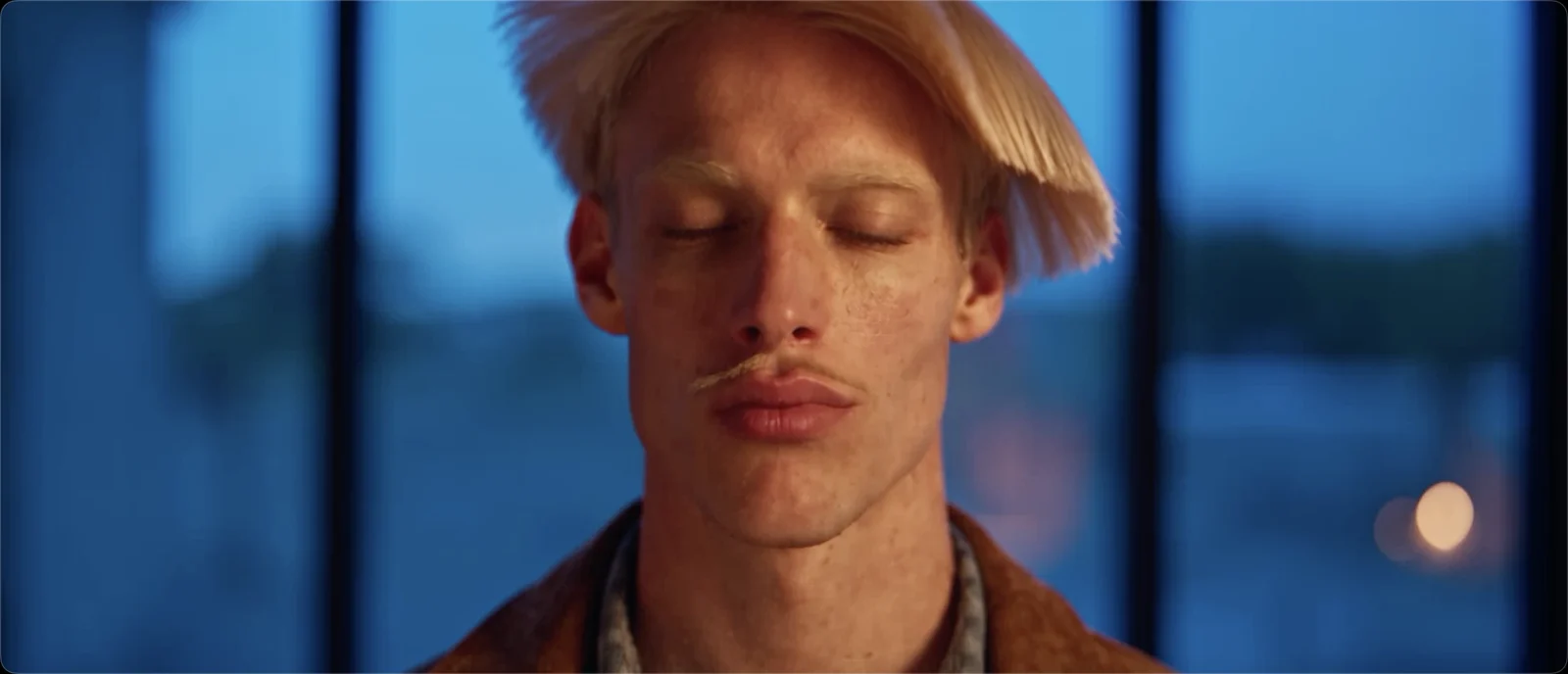
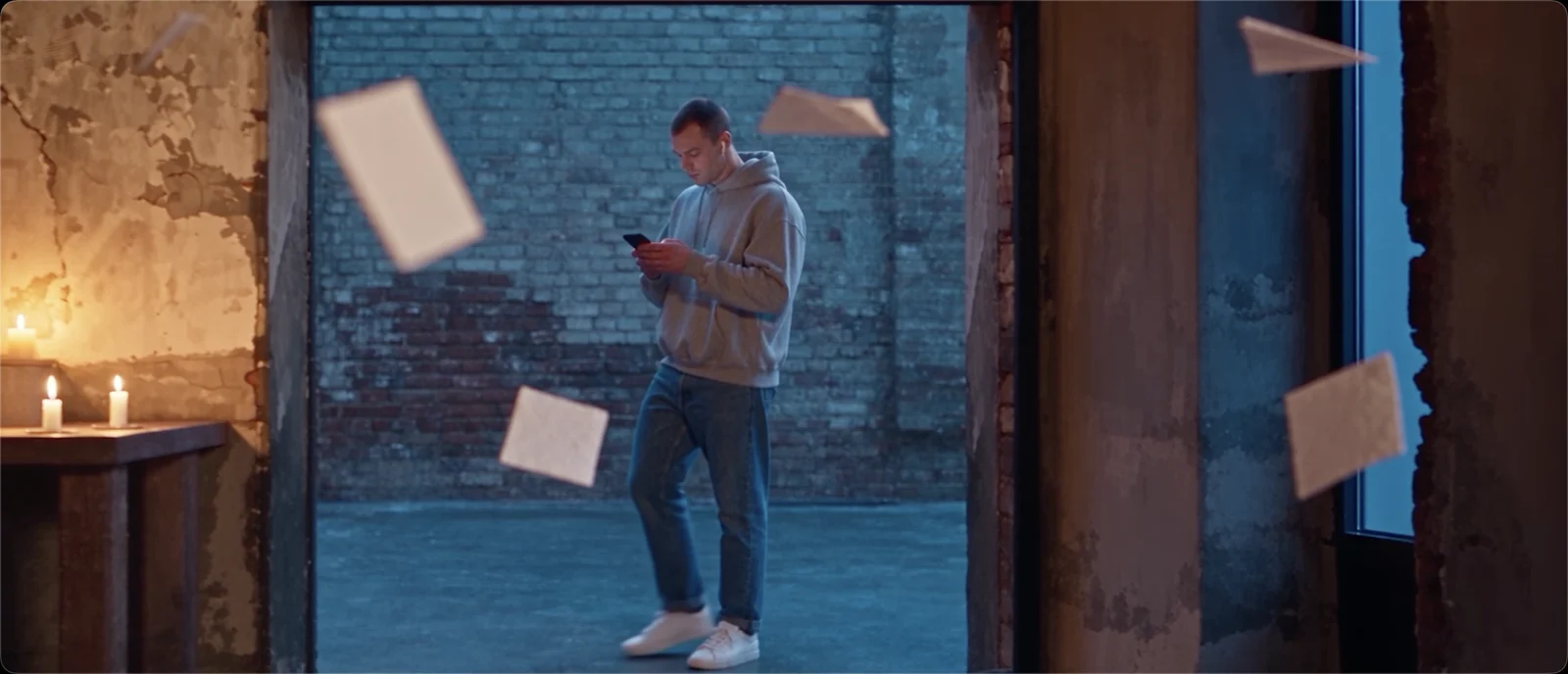
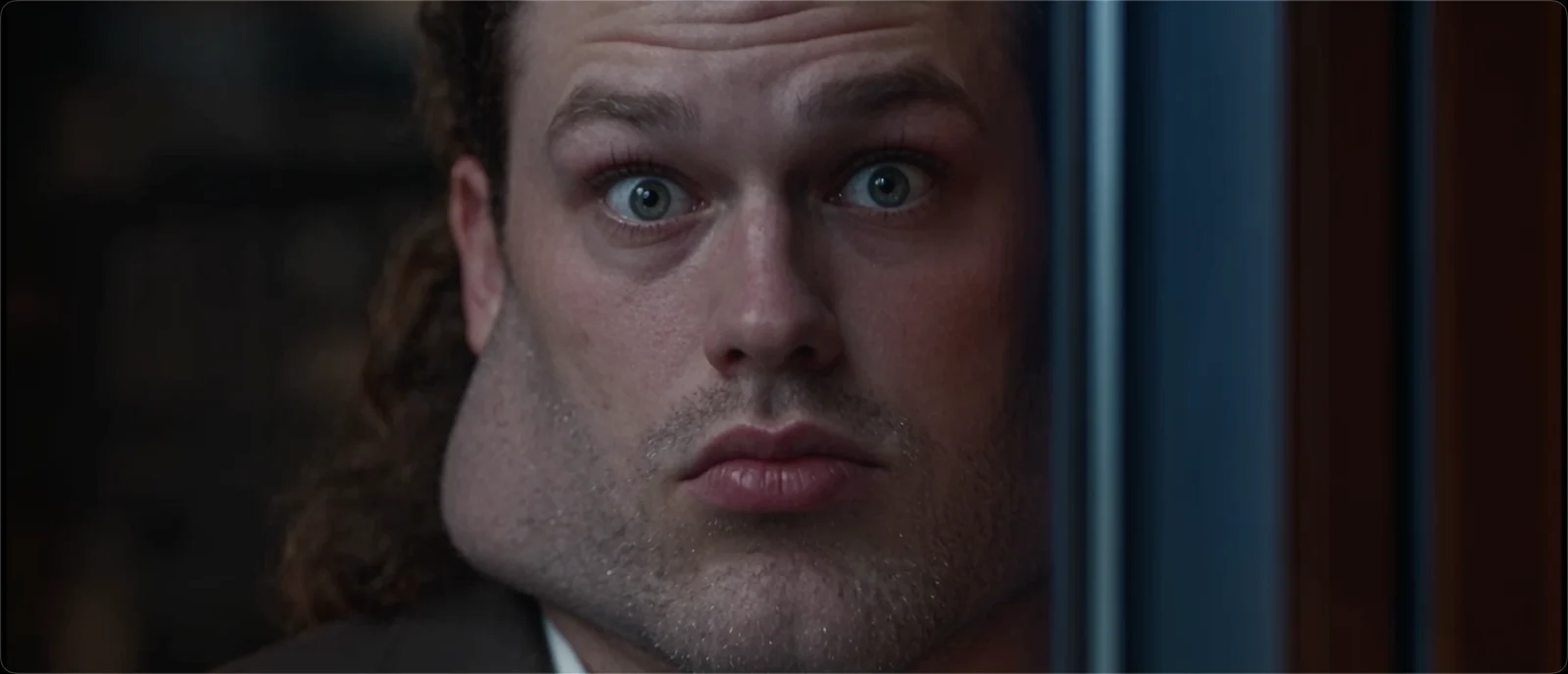
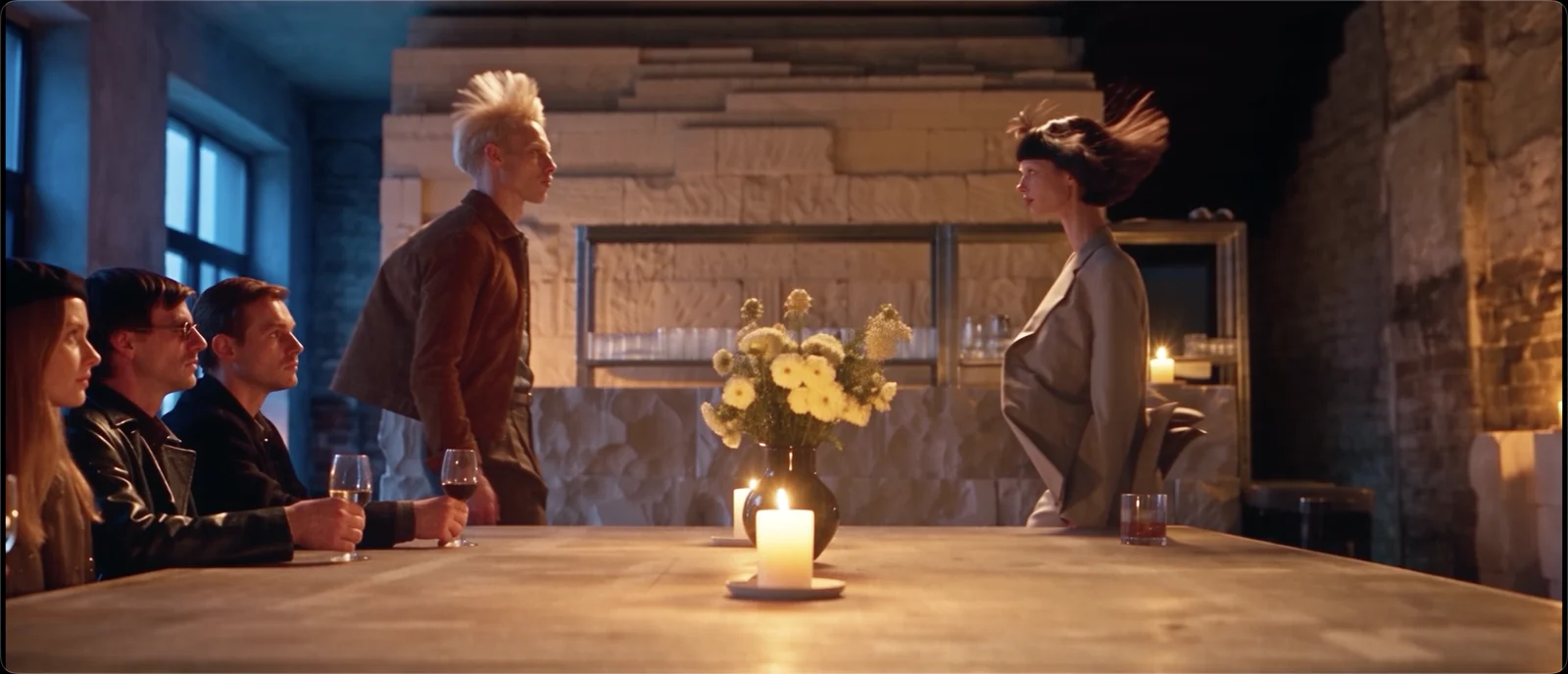
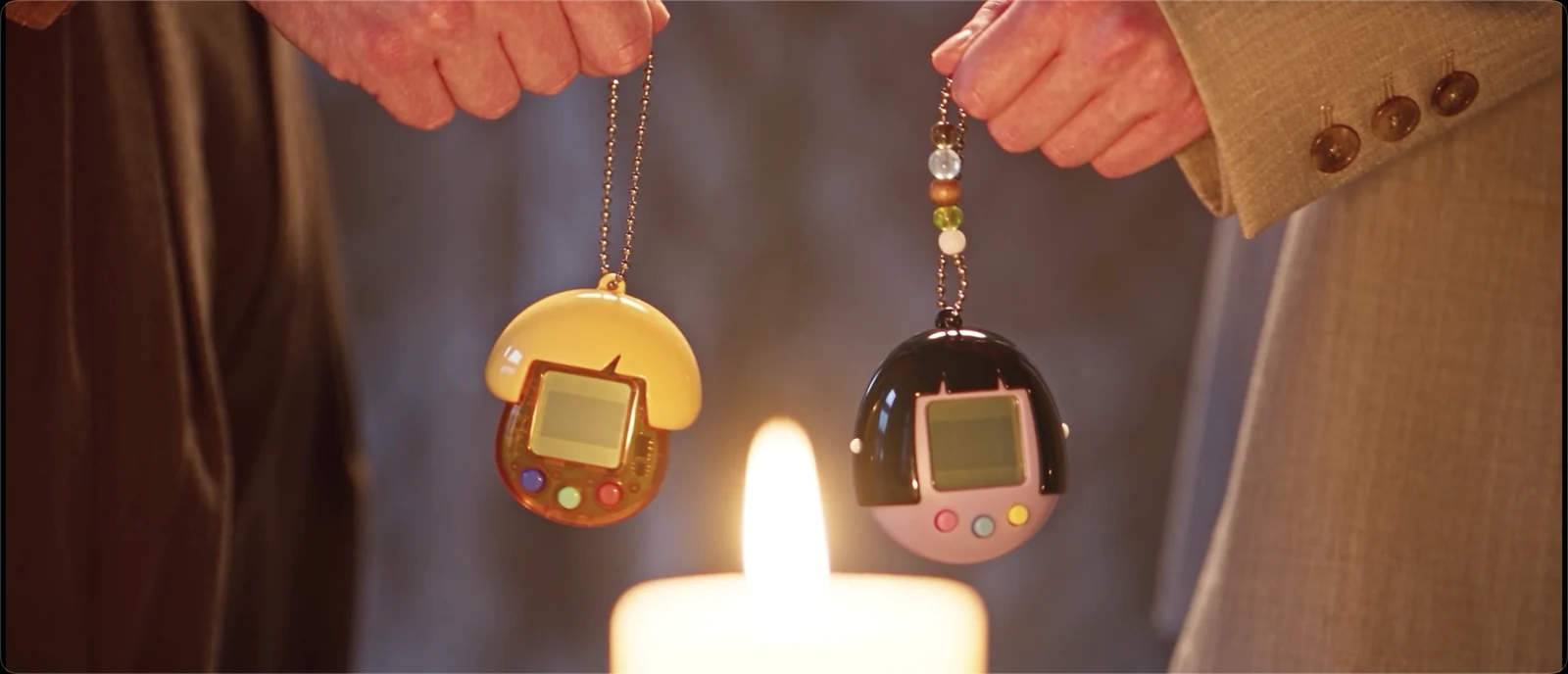

02
Niche as a meme
In 2026 “niche” became a meme: niche hobbies, niche courtyard bars, niche clothes. The fashion for being niche made it mainstream, and that paradox is ready-made drama. Two people for whom the main thing is not being like everyone else end up at the same table, and each is sure they’re the only niche one in the room.
Before the script I did some research: Moscow bars in courtyards and former garages, this year’s niche hobbies — knitting, origami, cyanotype, hiking. They gave me both the setting, a bar in a former car wash, and the characters’ “weapons” in the duel.
03
World and characters first, motion second
A video model holds on to what it’s been shown as an image and struggles with what’s only described in words. So before the first video generation I put together everything that had to stay fixed: the characters, their looks, the key props and two locations. Each stage hands the next one clean reference, and the prompt only covers what changes in the shot.
I write prompts using my own methods. A.O.C. breaks a shot into three axes: what’s in the frame, how the camera sees it and how light shapes it. Lock Layer is a set of fixed “locks” repeated in every prompt that keep the model from rewriting a face, the space or the crowd. The routine work — prompts for specific characters and the iteration log — was handled by Claude Code with access to my knowledge base; the idea, the casting and the choice of every shot are mine.
04
The characters start from a realistic base
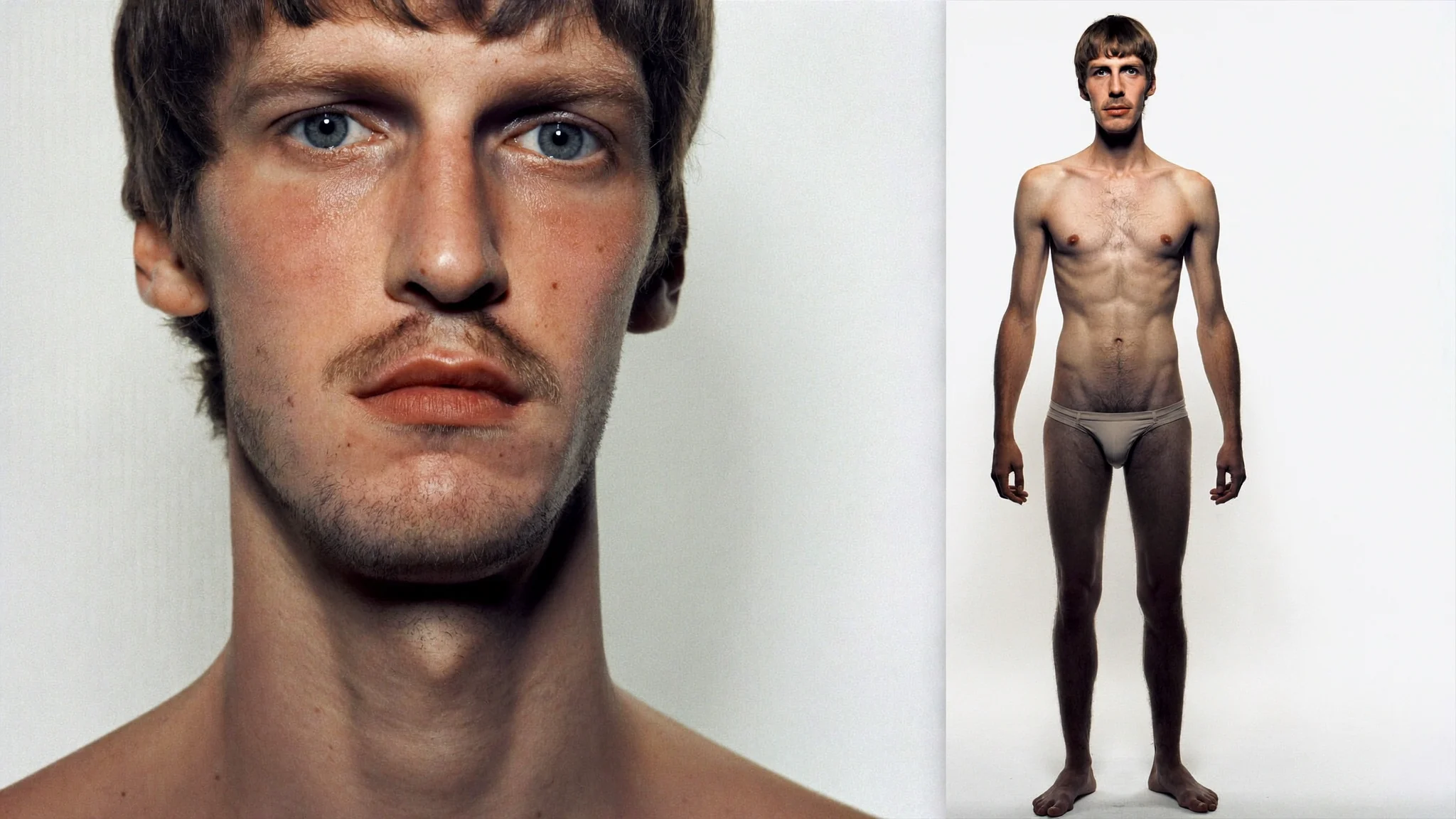
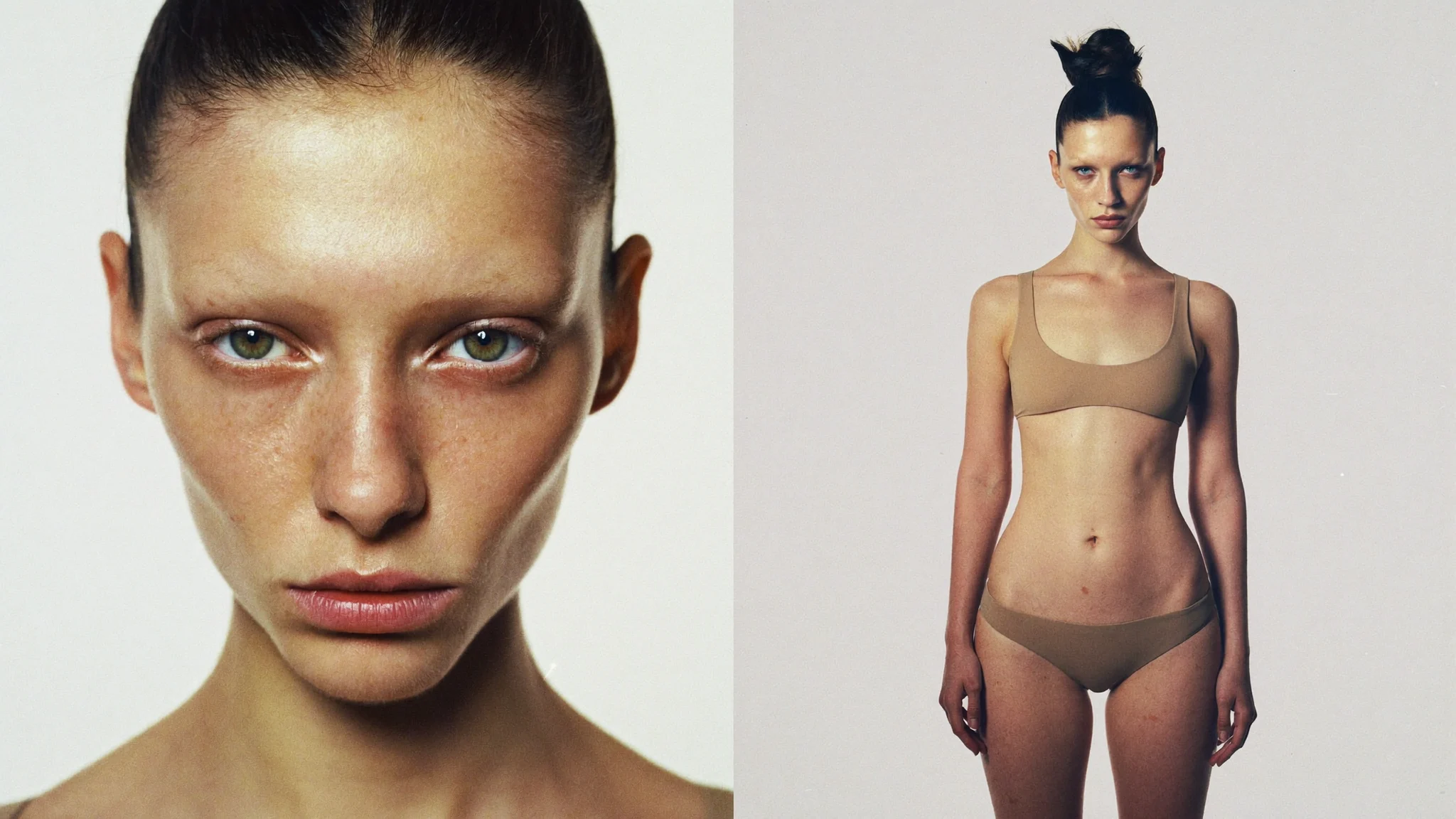
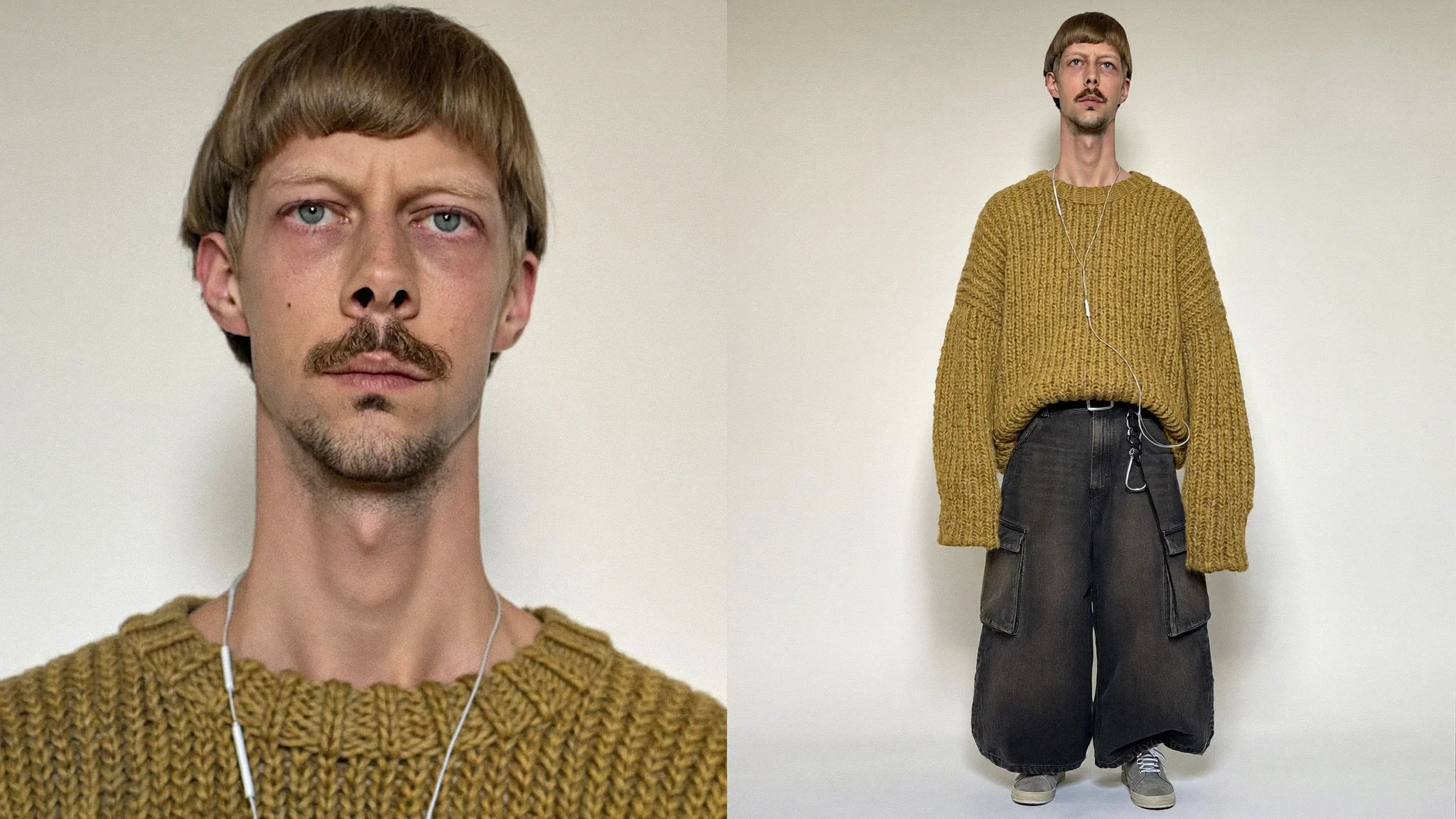
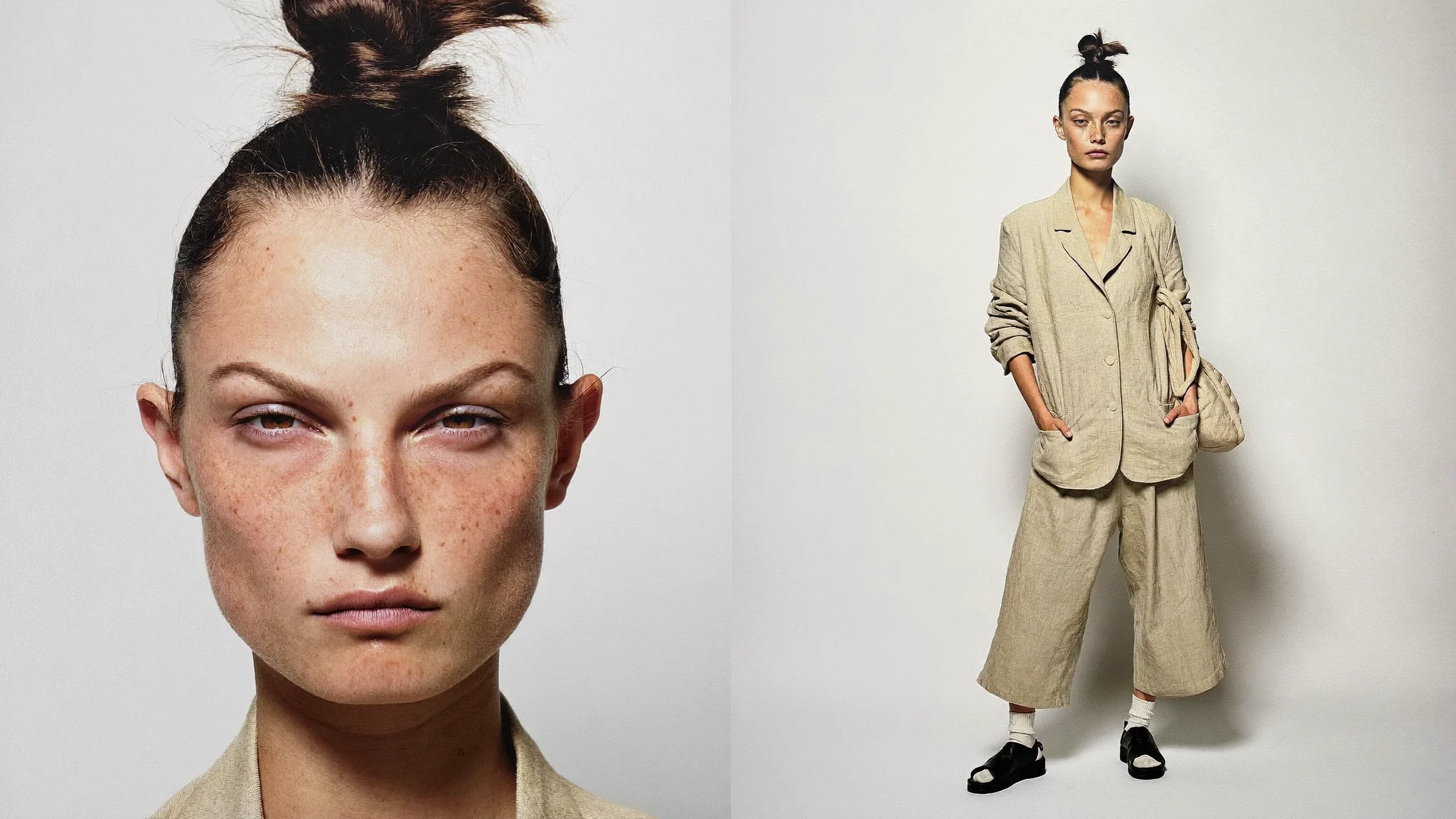
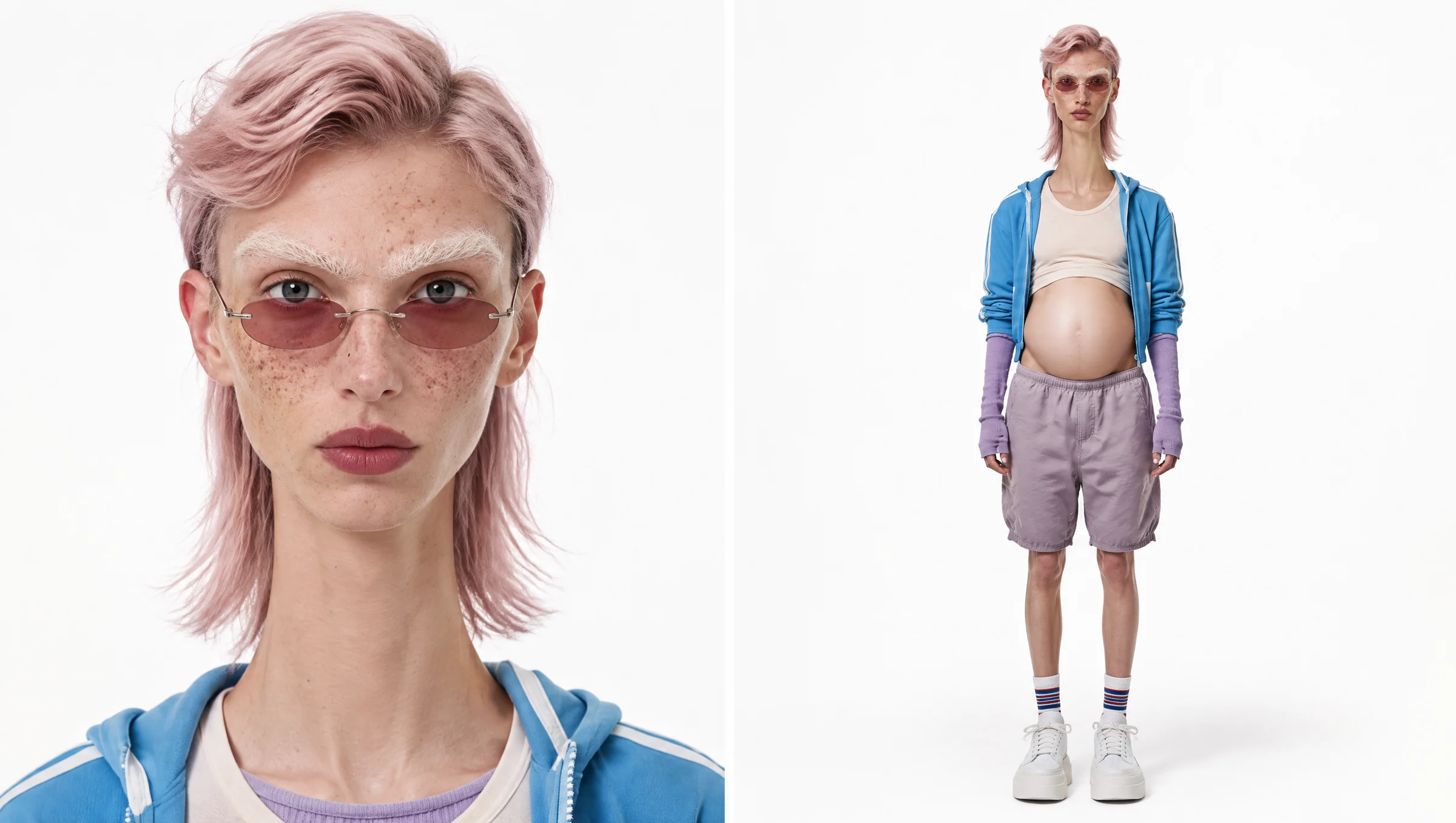
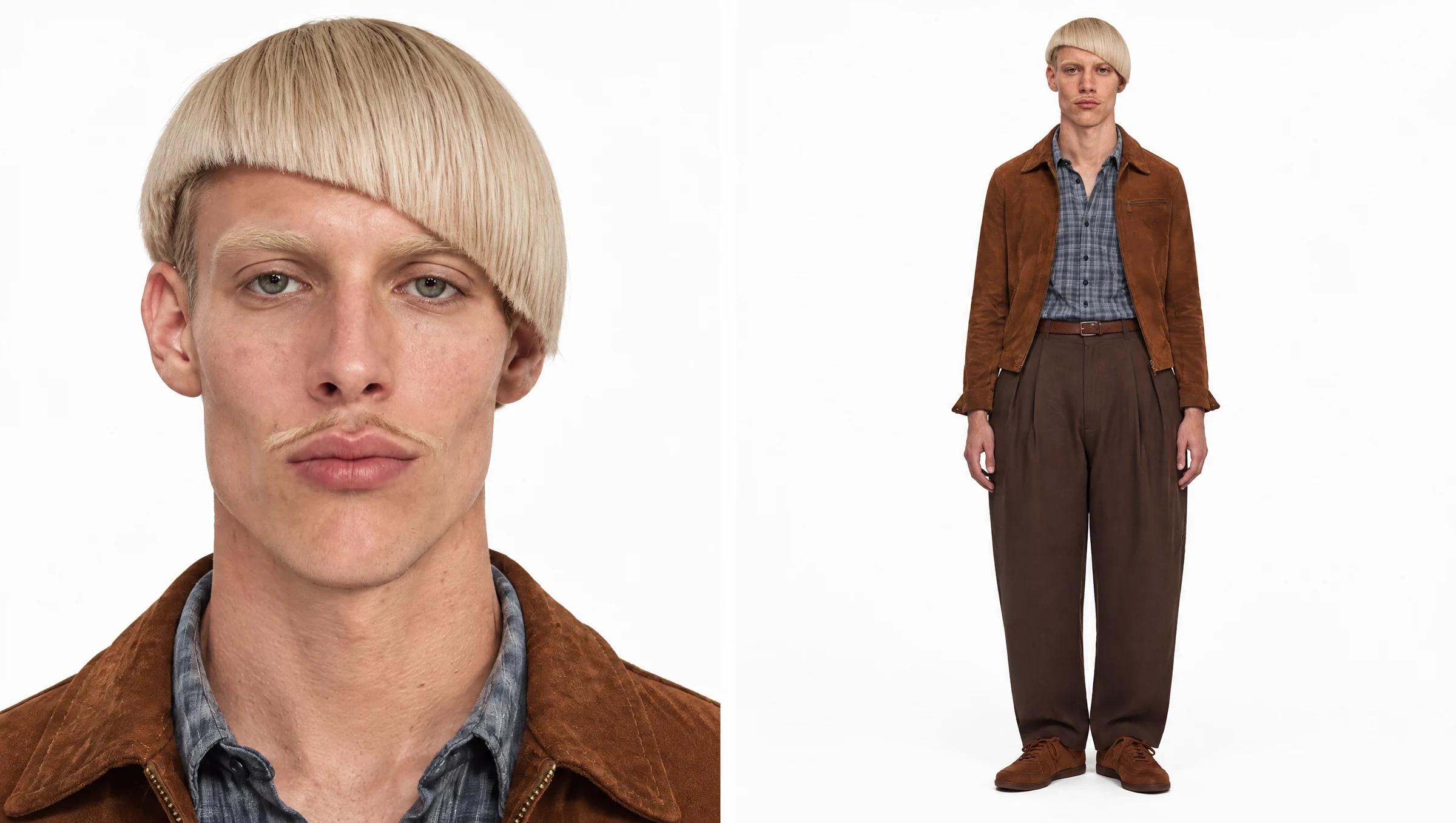
I first built the two leads, Nichus analogus and Nichus linea, as realistic people in Soul 2.0. The format is a “portrait plus full body” sheet on a white background: from it the video model later recognizes the face, the proportions and the clothes.
The prompt follows A.O.C. Appearance and look go into Anchor. The optics are described by function: eye level, around 50 mm, the whole figure in focus. The light is described as physics: two diffused sources, 2:1 contrast, about 5500 K. No “8K” and no camera names — they tell the model nothing about the shot.
The first versions came out in basic underwear: the look was a separate step. In the next pass the clothes went straight into the prompt, so the sheet becomes a ready reference right away.
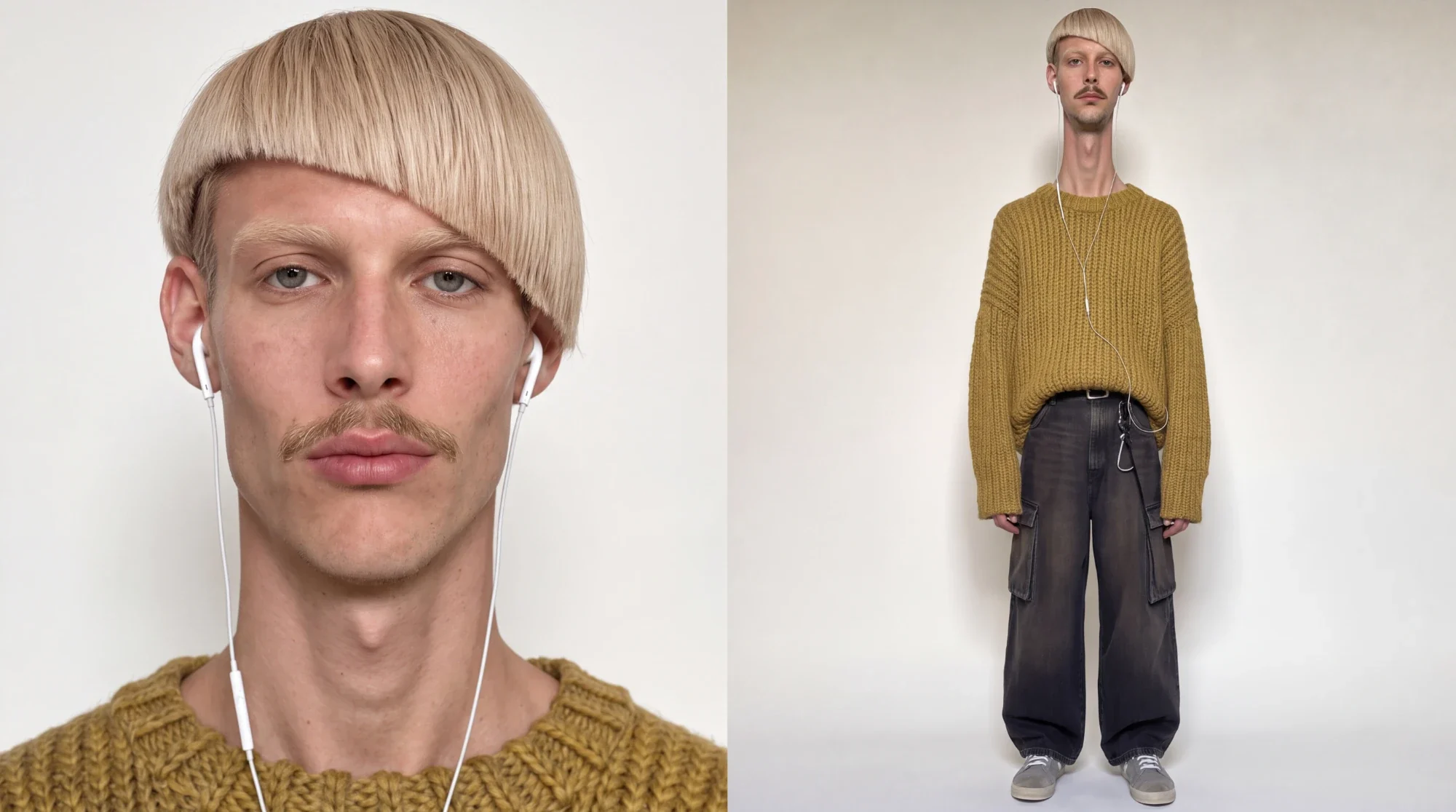
ANCHOR — Character reference sheet, two panels side by side on one plain seamless white studio background. Left half: close-up portrait, head and shoulders cropped at upper chest, face fills the panel. Right half: the same man, full body head to toe, smaller scale, standing idle, arms at sides. Both panels face the camera straight on; identical person and identical outfit in both. Subject: realistic European man, 23-27, very tall and slim, fair skin; light brown curtain-bangs haircut; gray slightly heavy-lidded eyes; long narrow face, defined cheekbones, faint patchy mustache; long neck with visible Adam's apple; calm neutral expression; natural body proportions. Outfit: oversized chunky hand-knit sweater in faded mustard, sleeves covering half the hands; very wide-leg washed black cargo trousers with a metal carabiner clipped to the belt loop; worn grey suede sneakers; white wired earphones hanging around the neck, cable tucked into the sweater. No logos, no text.
OPTICS — Camera at eye level, square to the subject, no tilt. Natural ~50mm perspective without wide-angle distortion; portrait panel at close distance, full-body panel from far enough to keep the body undistorted head to toe. Deep depth of field, entire figure sharp, focus plane on the eyes. No motion blur, no bokeh effects.
CHEMISTRY — Large diffused sources from both sides of the camera, even wrap, soft shadow edges, ~2:1 contrast ratio, no cast shadows on the background. Neutral daylight ~5500K, true-to-life color, no stylized grade. Skin rendered with visible pores, fine hair, natural imperfections and subsurface translucency; knit, cotton and suede show real fibre and wear. Fine film-like grain, no smoothing, no plastic skin.
05
Personality comes from AI Influencer
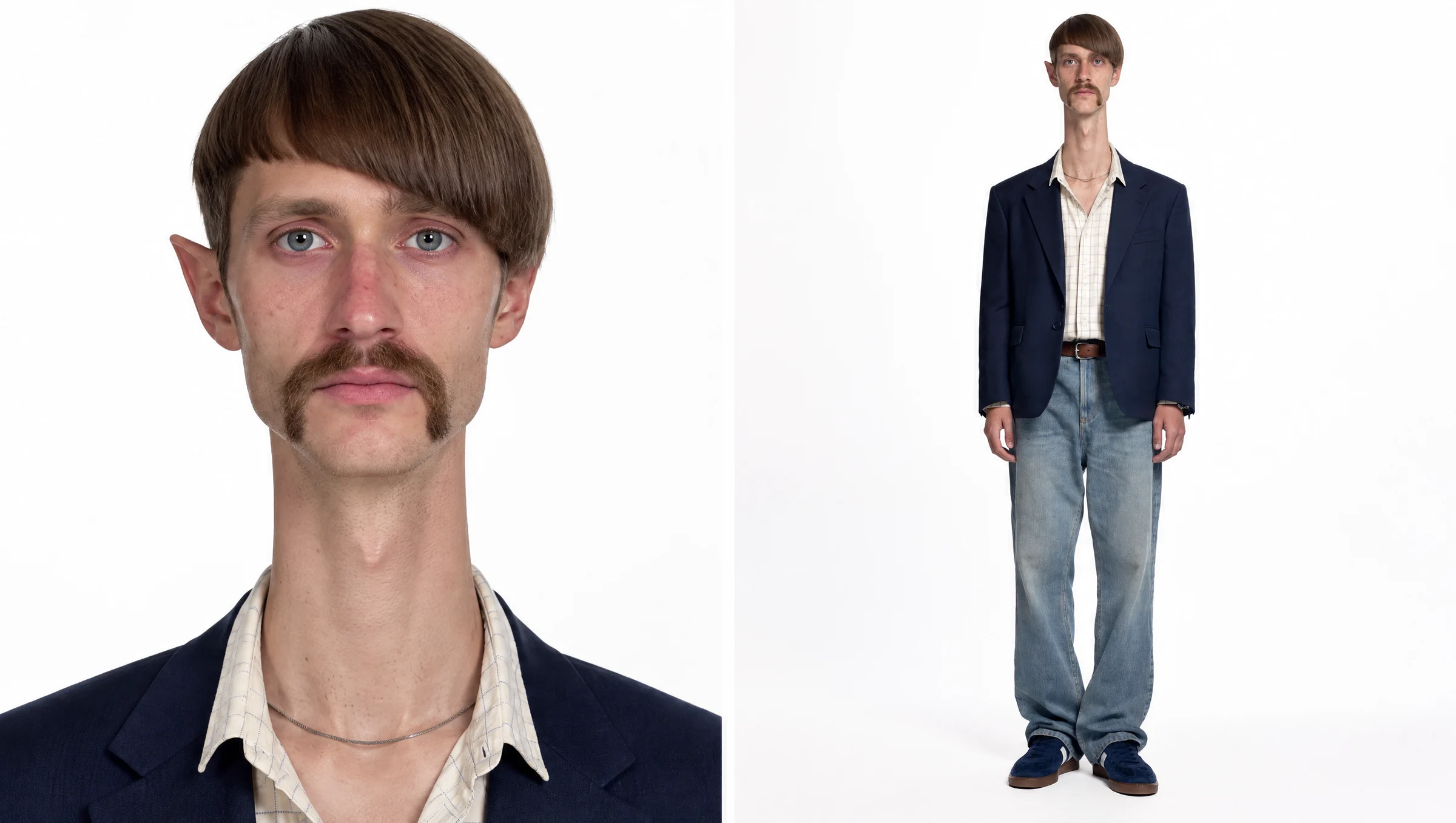
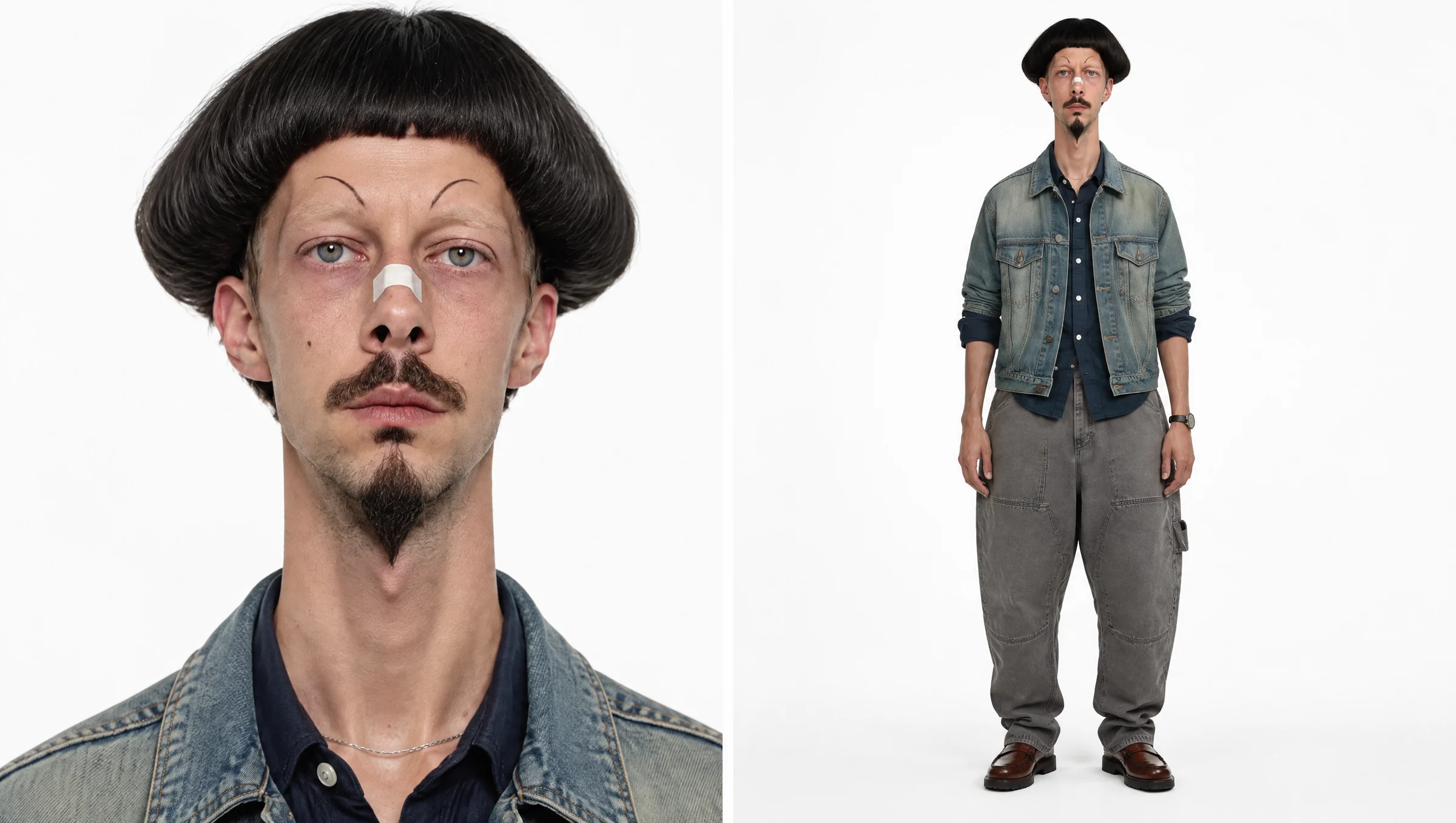
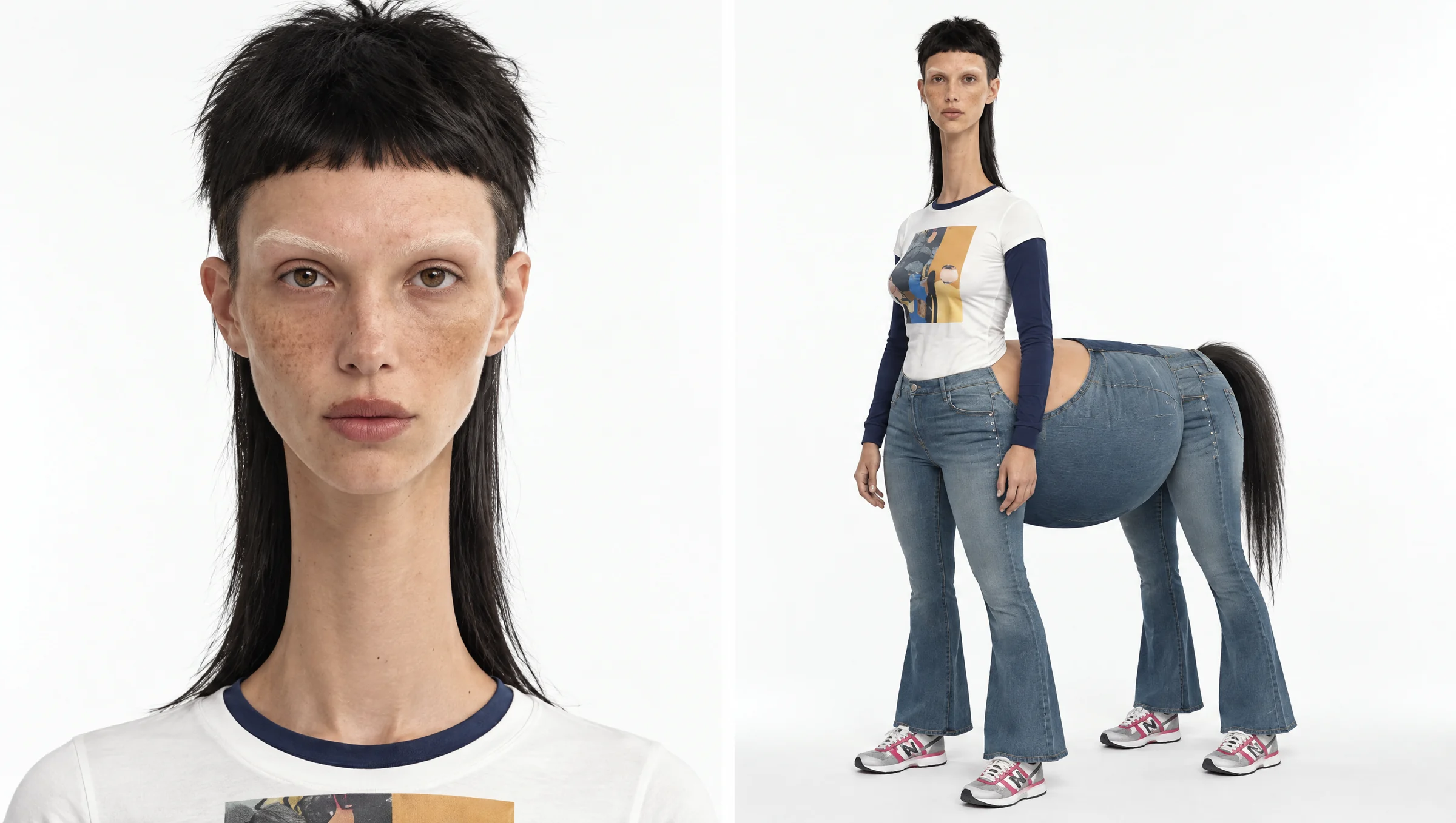
The realistic sheets became the base for AI Influencer, where the characters get their personality. I tuned the parameters in the interface and picked variants by one criterion: being niche has to read from the first frame, in the face and silhouette, before the character has done anything. Each ended up with three final variants.
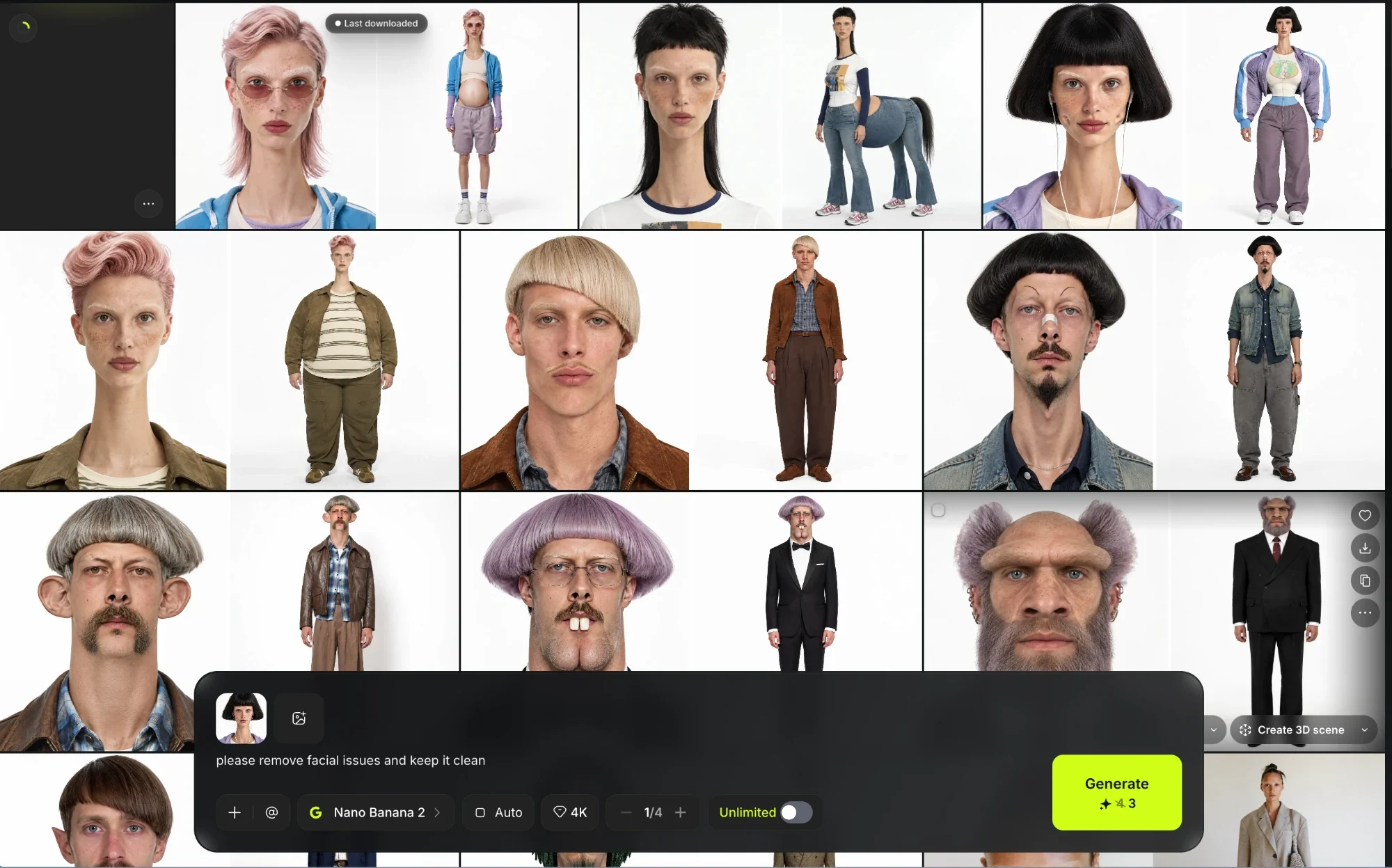
06
How I picked the final characters
For Nichus analogus I tried to assemble an “ideal” character in Nano Banana 2 from three references: the face from AI Influencer, a caricature body and the look from Soul. Each reference has one role, and the prompt says so explicitly — otherwise the model blends the faces. The result was neat, but the AI Influencer original turned out livelier, so that’s the one I kept. Sometimes the best result is the one you already have.
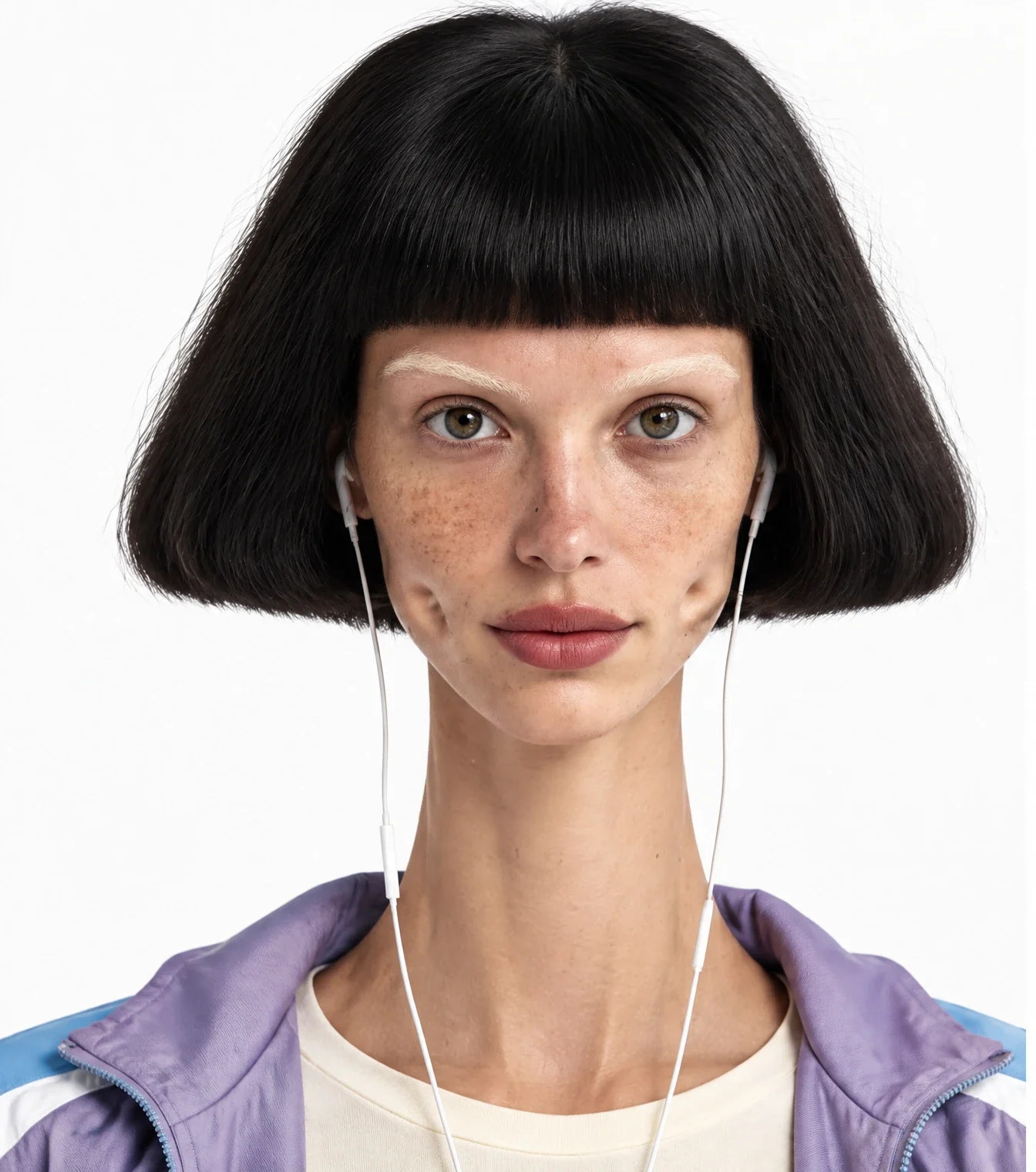
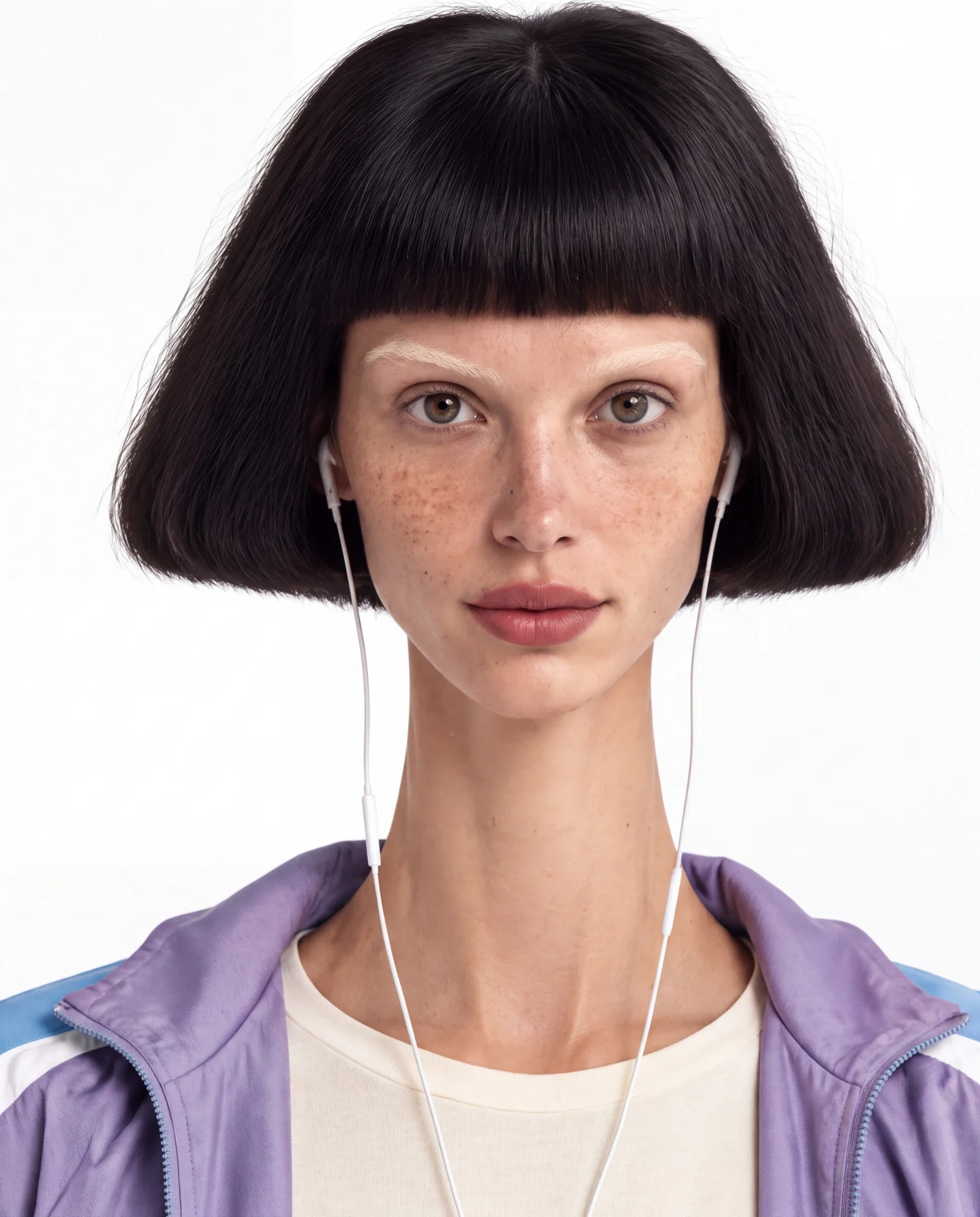
Nichus linea had dents on her cheeks. I remove defects like that surgically and spell out what to keep: without it the model also “cleans up” the freckles and white eyebrows, and the personality goes with them.
Remove only the two small dents on her lower cheeks near the jaw. Keep everything else exactly the same: freckles, white bleached eyebrows, skin texture, hair, earphones, outfit.
07
A prop as an extension of the character
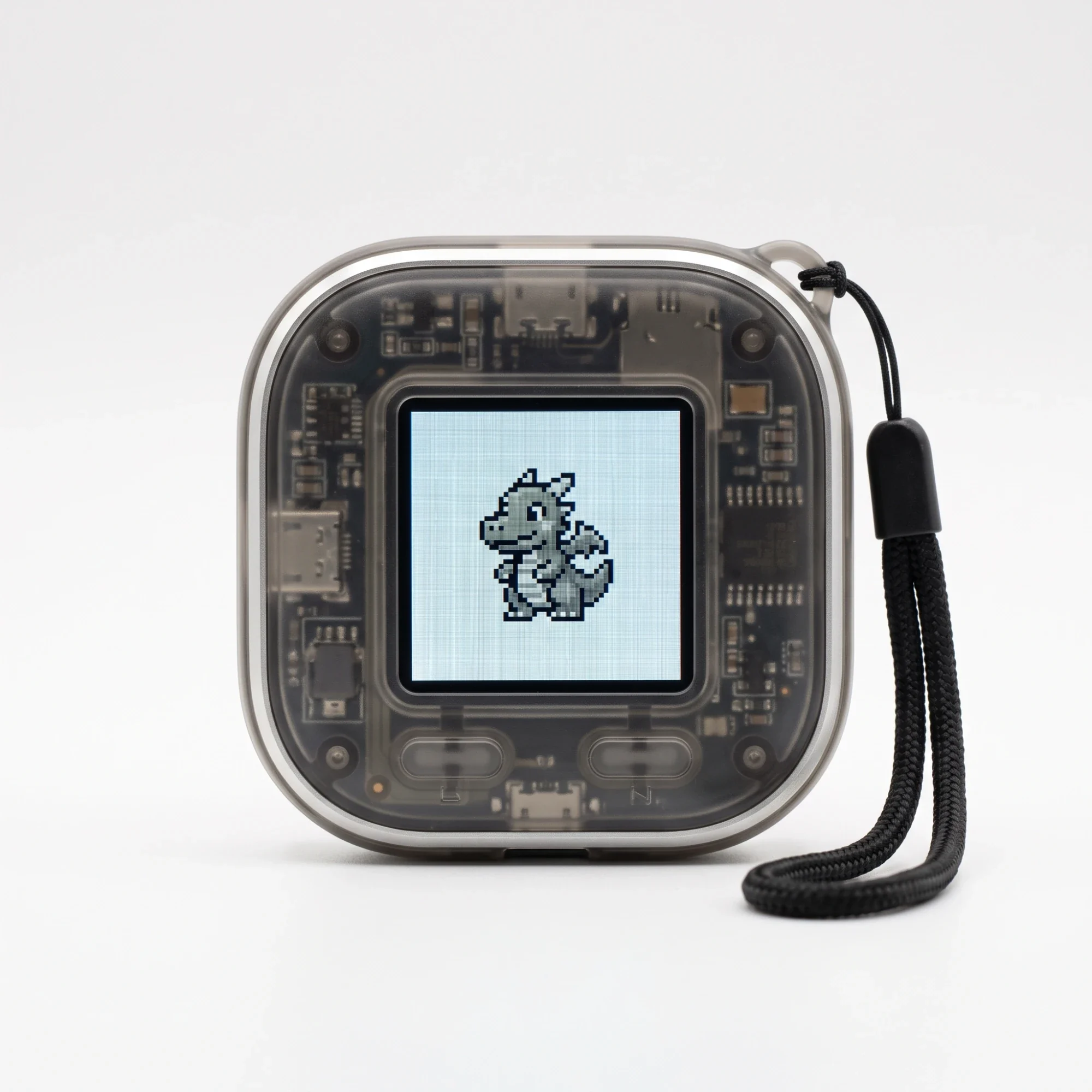
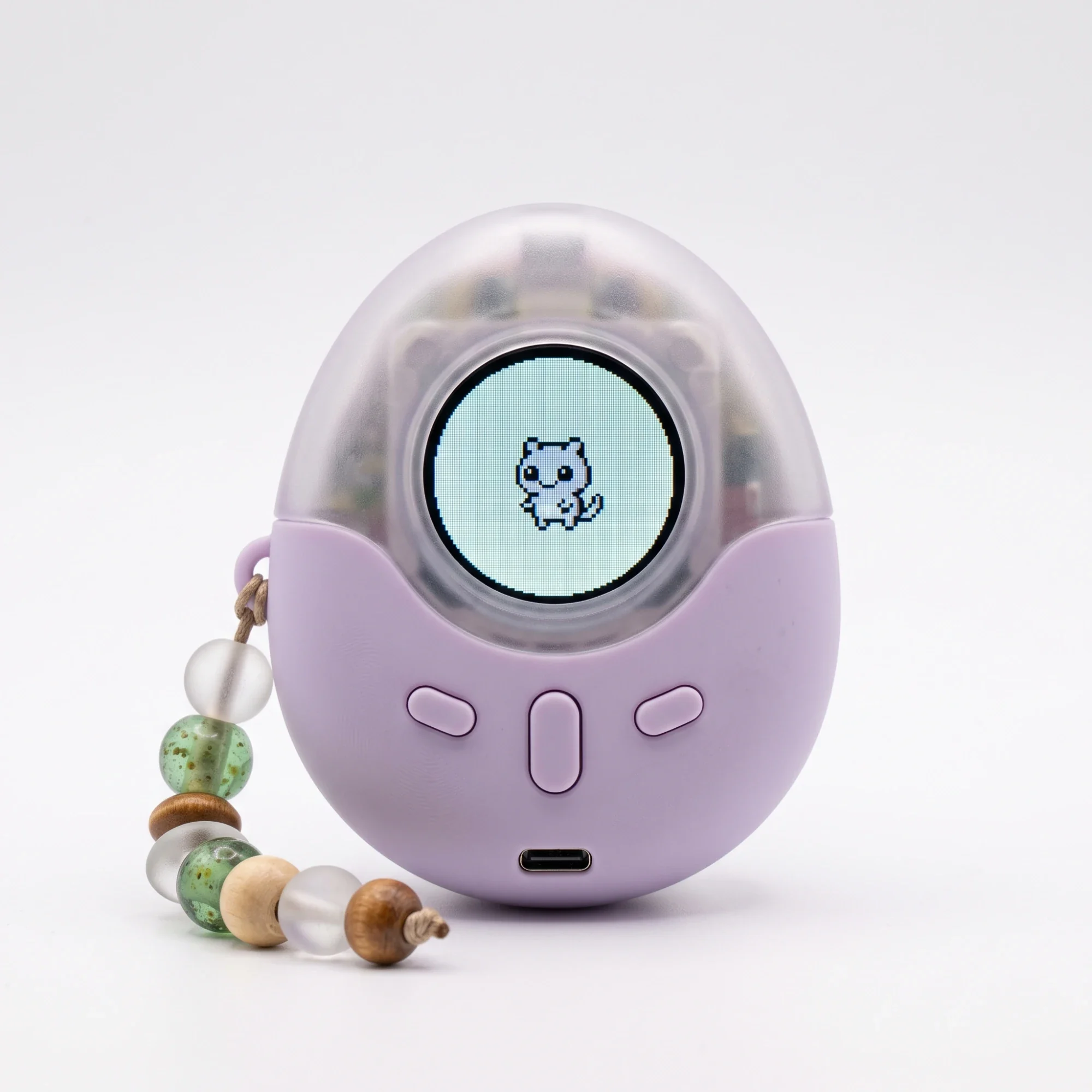
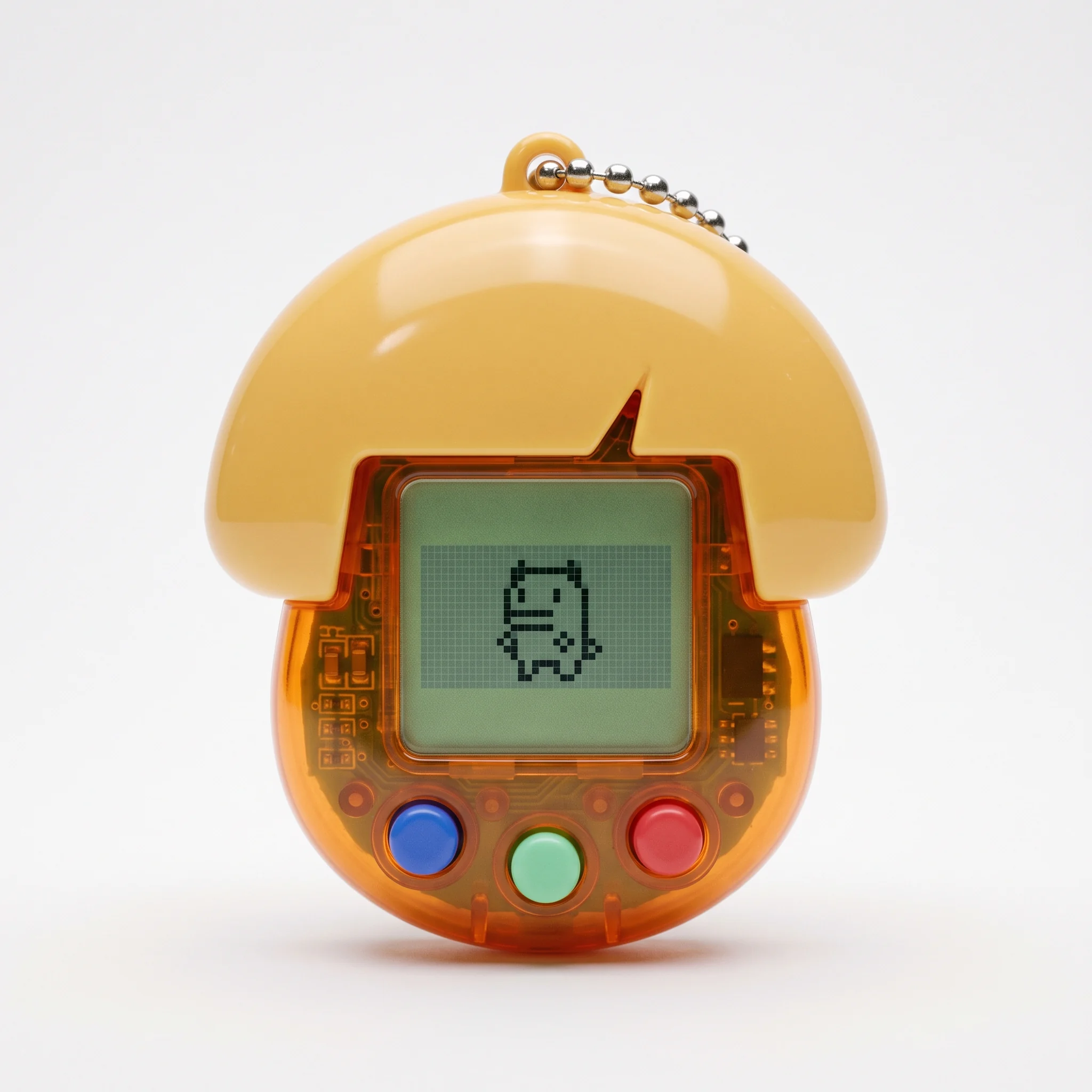
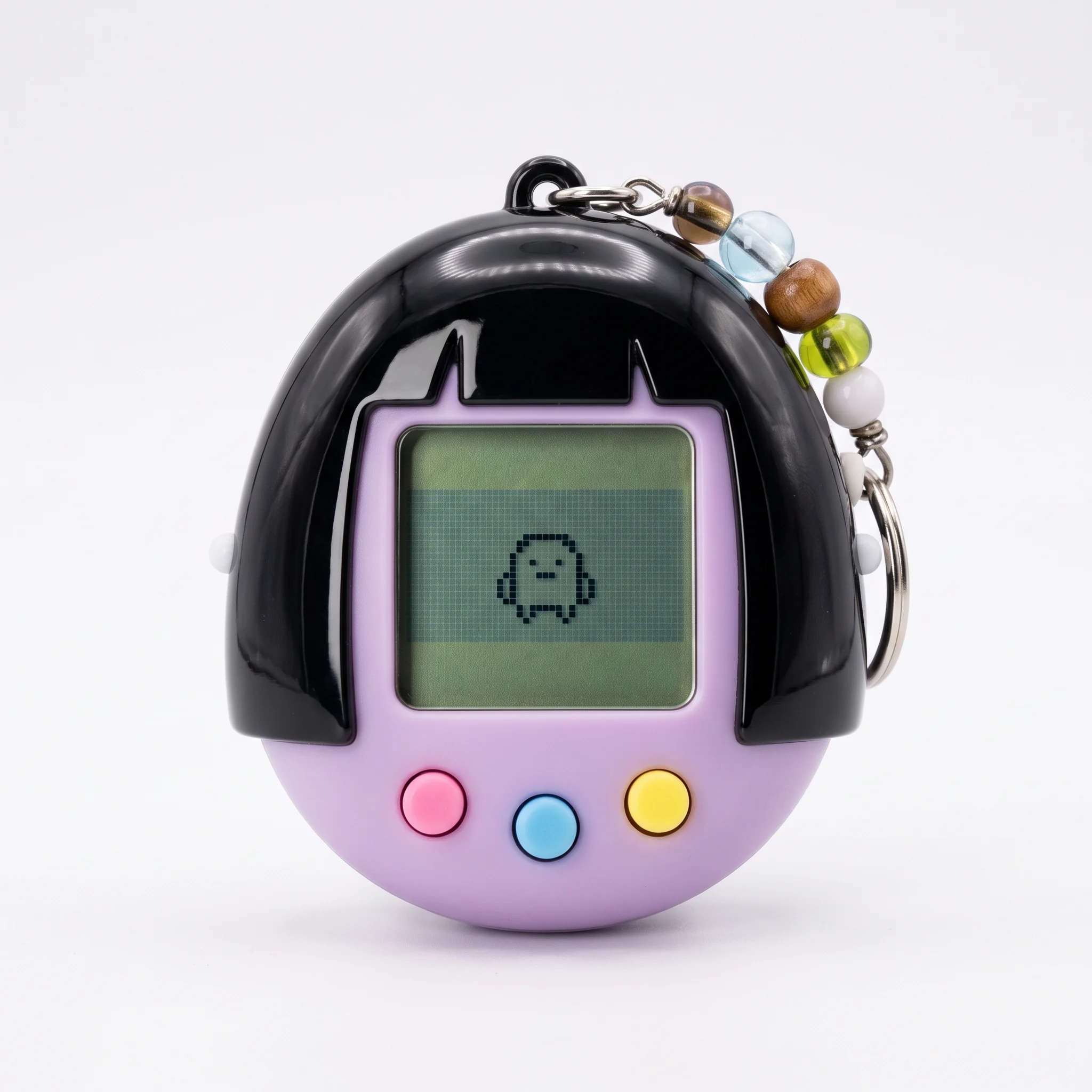
I only make separate references for what the model can’t draw consistently from text. Here that’s the tamagotchis — the finale rests on them. The first version was just a trendy gadget and said nothing about the owners. In the second the case echoes its owner’s haircut: his is a mushroom cut with a side fringe, hers a black bob. The scarf, the origami and the compass from the duel went in as text: the model knows those already.
08
One evening for every shot
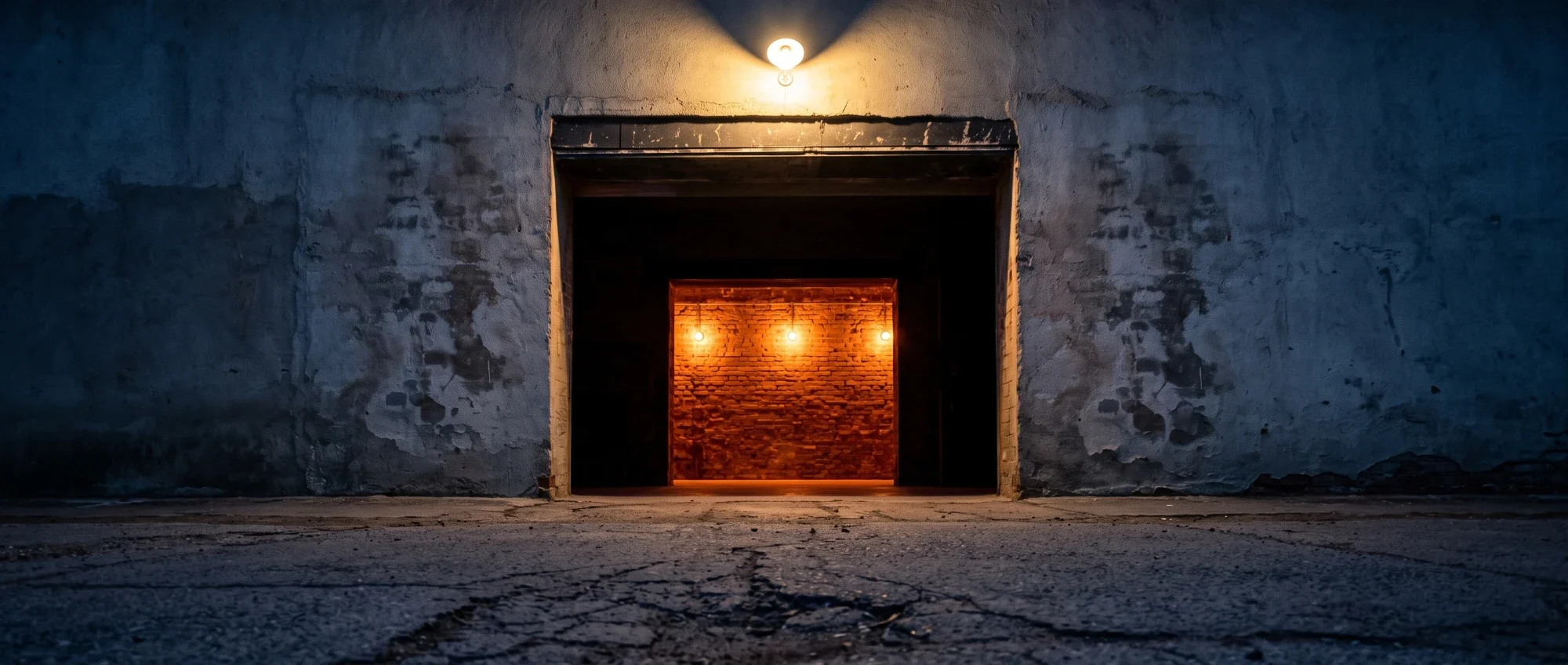
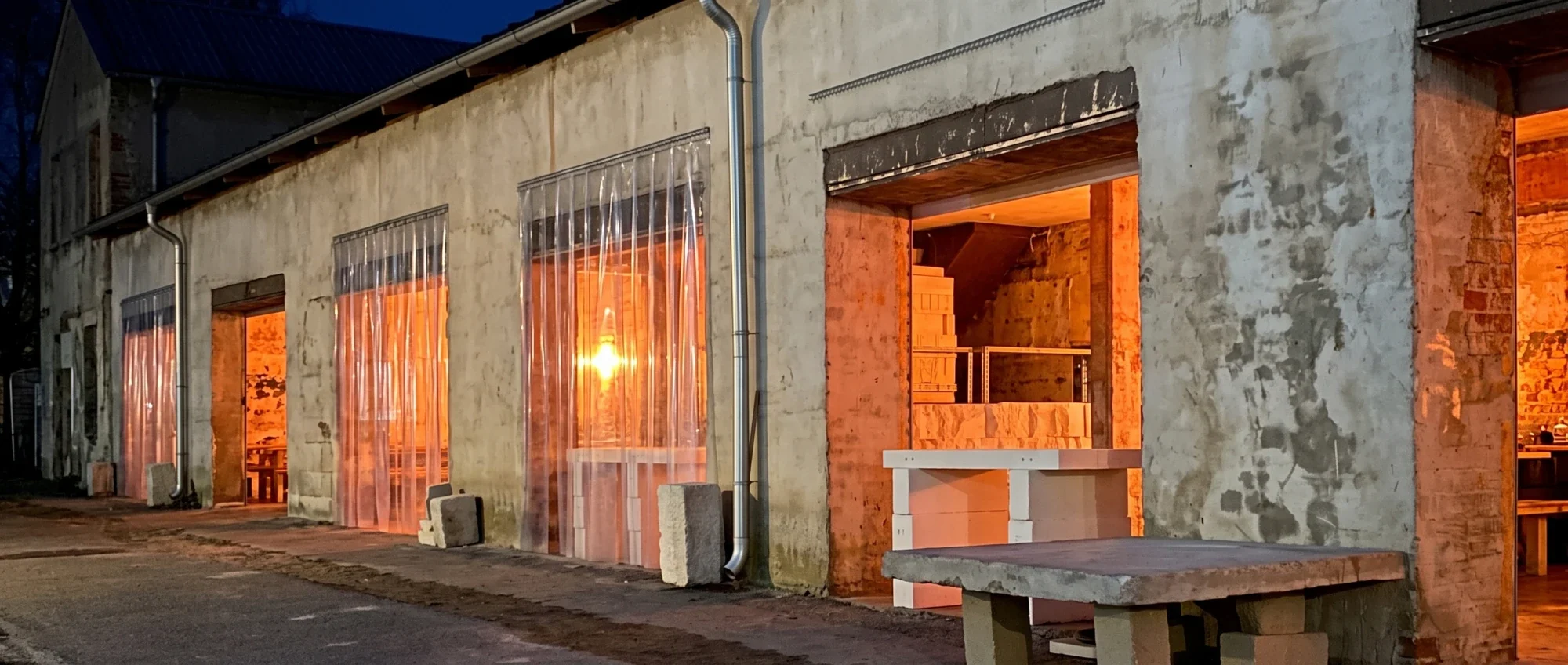
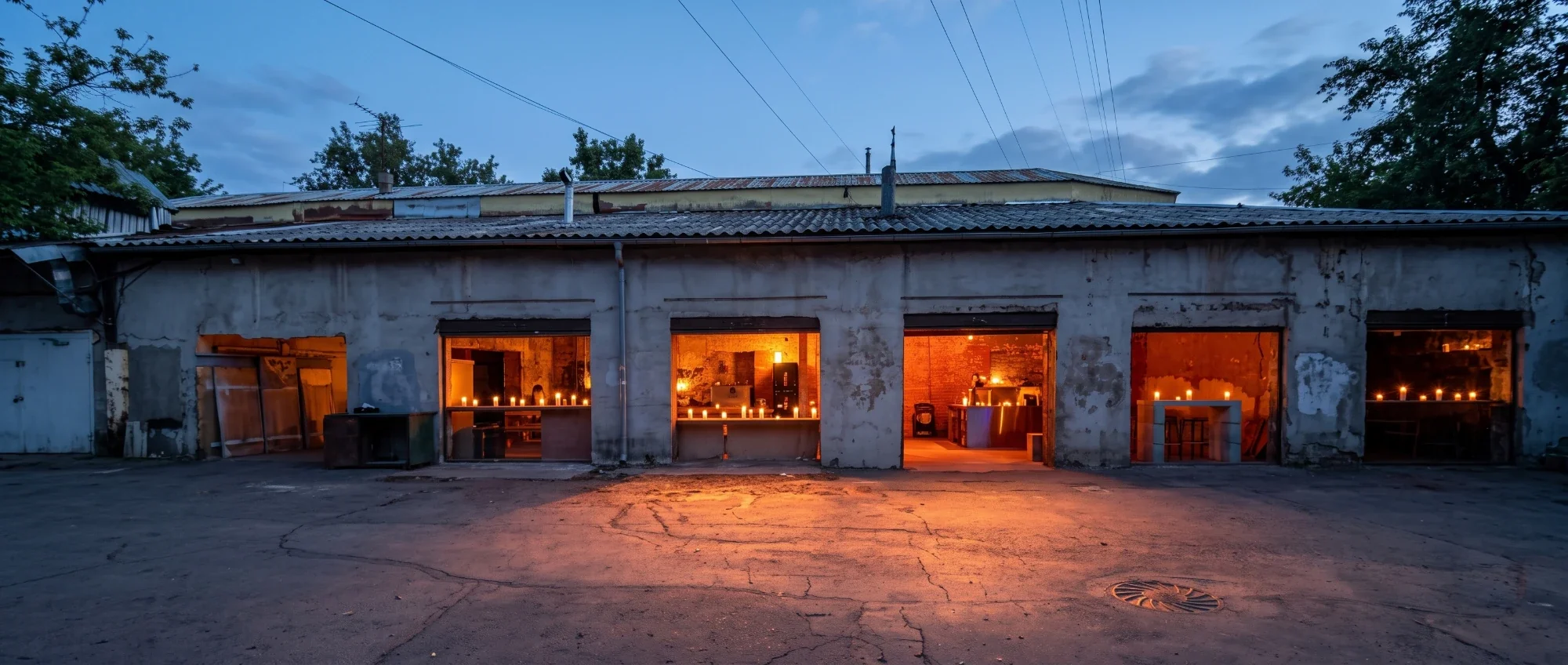
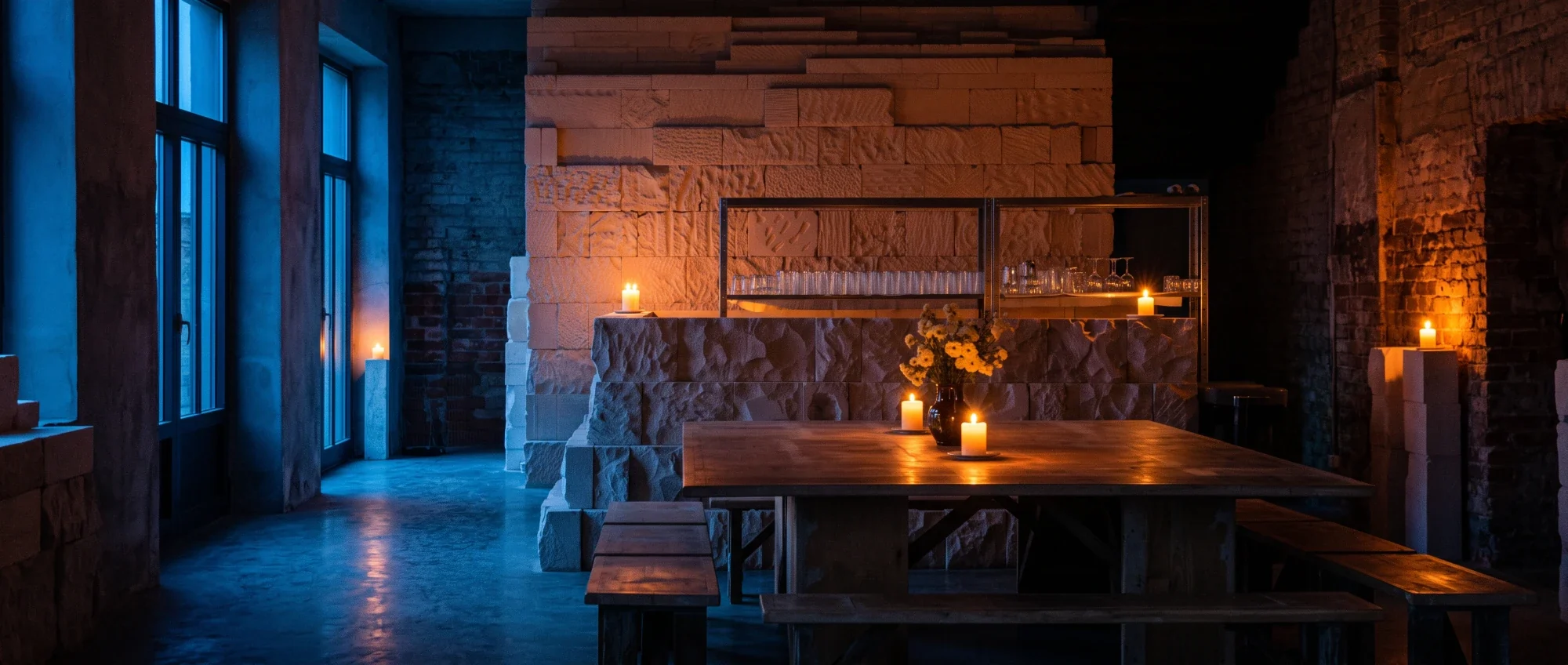
At first I generated a separate frame for each scene: the entrance, the courtyard, the facade, the hall. Each had its own reference and its own time of day, and every time the model reinvented the building — the number of openings, the plaster, the sky didn’t match.
The fix was fewer images, not more. Two master locations, shot as if on the same evening: the courtyard at blue hour and the hall, relit with the same blue from the windows and warm candles. The video model cuts its own angles from them, and the space stays one.
09
Four blocks of 30 seconds
Seedance 2.5 generates up to 30 seconds at a time and can extend a clip from its last frame. The film is built from four such blocks: the first is a generation, the rest extend the previous one. One generation holds light, faces and space better than a dozen short ones, so inside each block I lay out 7 to 19 shots with duration and camera movement.
The prompt is JSON: what to take from each image, global rules and a shot list. The rules work like the same locks: each shot starts where the previous one ended; nobody appears without being introduced; no lines of dialogue and not a single letter in the frame.
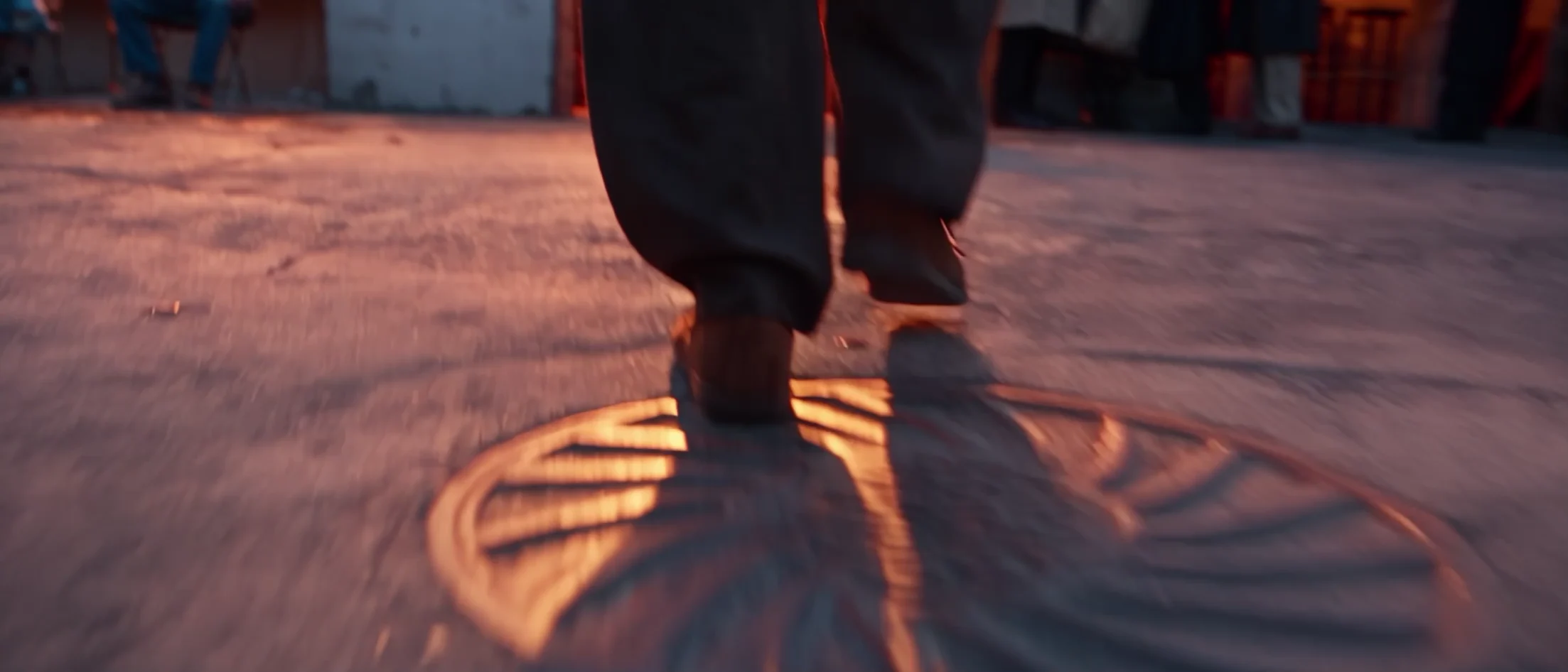
c: Ankle-height handheld tracking following feet, camera shaking with each step, tilt up at the end
p: Brown suede shoes and wide brown pleated trousers flapping with each step cross the cracked asphalt past the manhole cover toward the central opening; dry leaves crunch and skitter.
10
Keeping the characters in their places
The most common failure of video models in scenes built on looks is that space “drifts”: in the wide shot the characters sit at opposite ends of the table, in the inserts they’re side by side, and in a new room every time. That happened to me too.
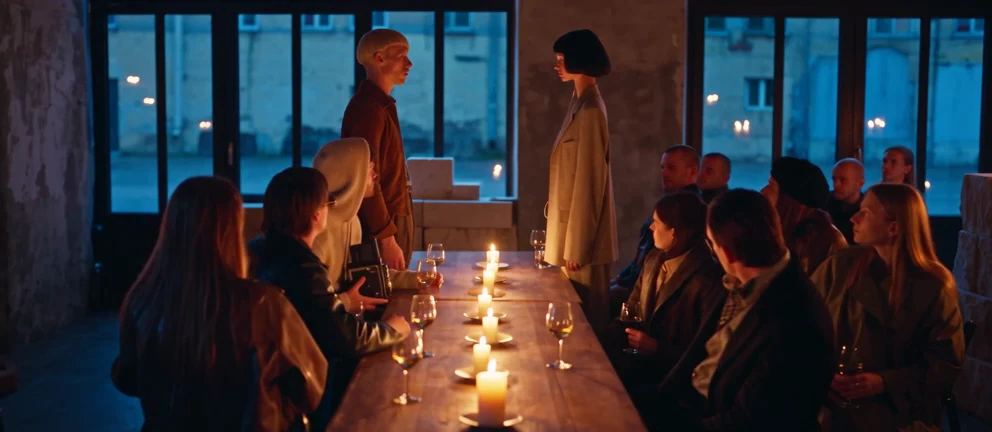
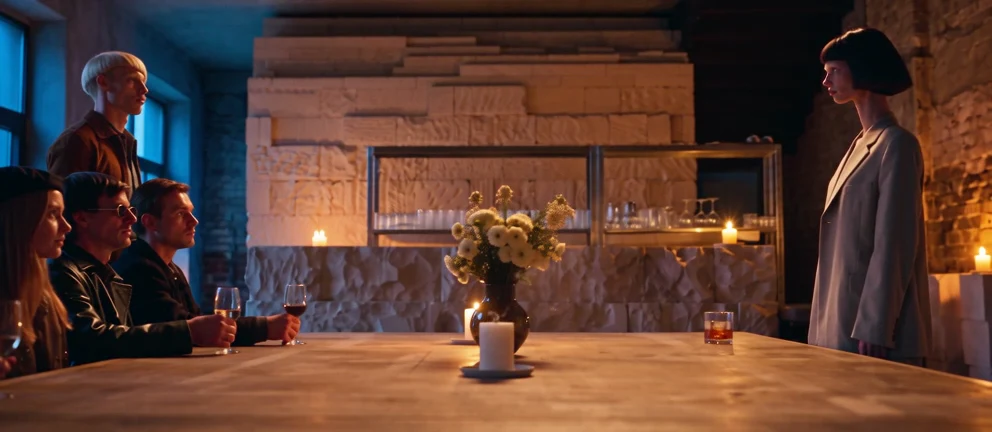
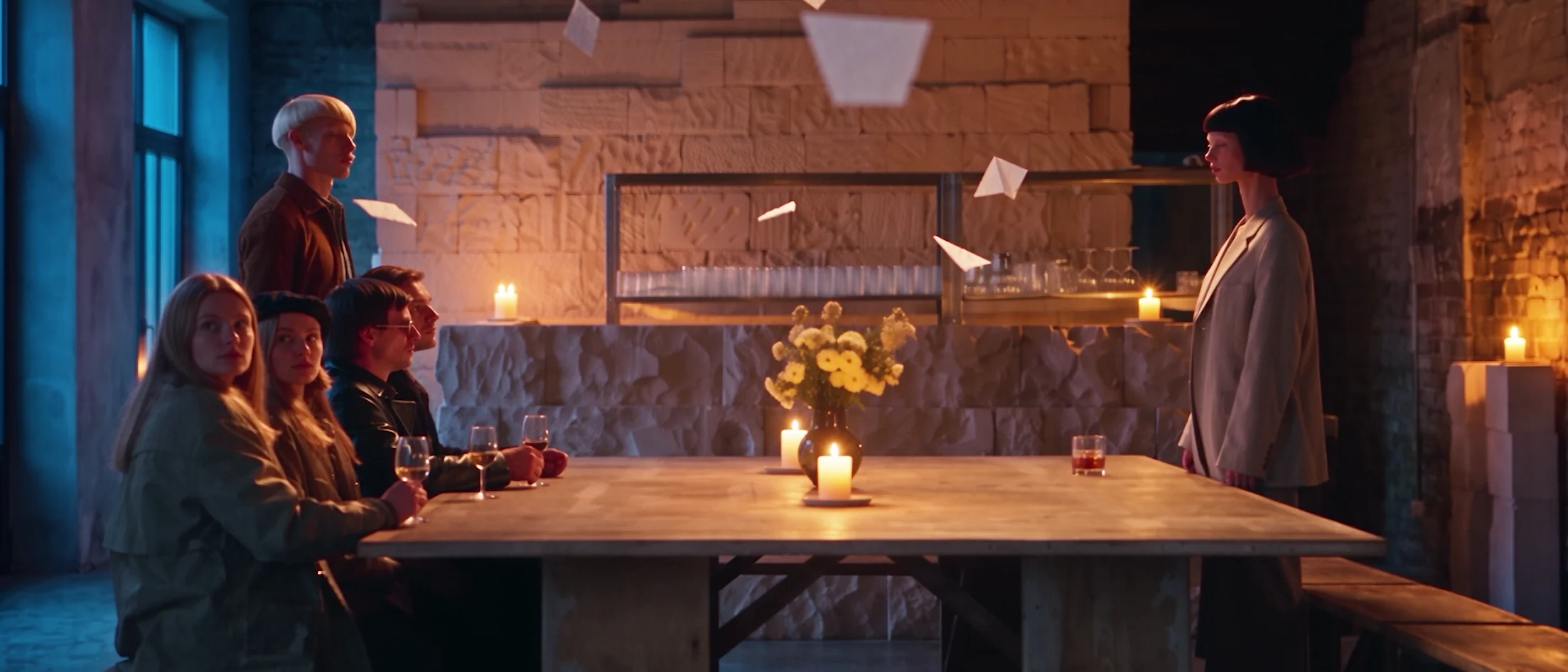
The cure isn’t persuasion but geography. I wrote the room out as a map: he is always by the windows and on the left of the frame, she by the limestone wall and on the right; wides are shot from the side, inserts show one character each against their own background. After that the space settled.
SPACE LOCK—ONE room only, exactly @image1; no other rooms. A is always at the WINDOW END, B always at the BAR END. Screen direction never flips: A is always frame-left facing right, B always frame-right facing left. Every shot of A has blue windows behind him; every shot of B has the limestone wall behind her. Two-shots are profile wides from the side of the table showing both ends.
11
A staredown like a western shootout
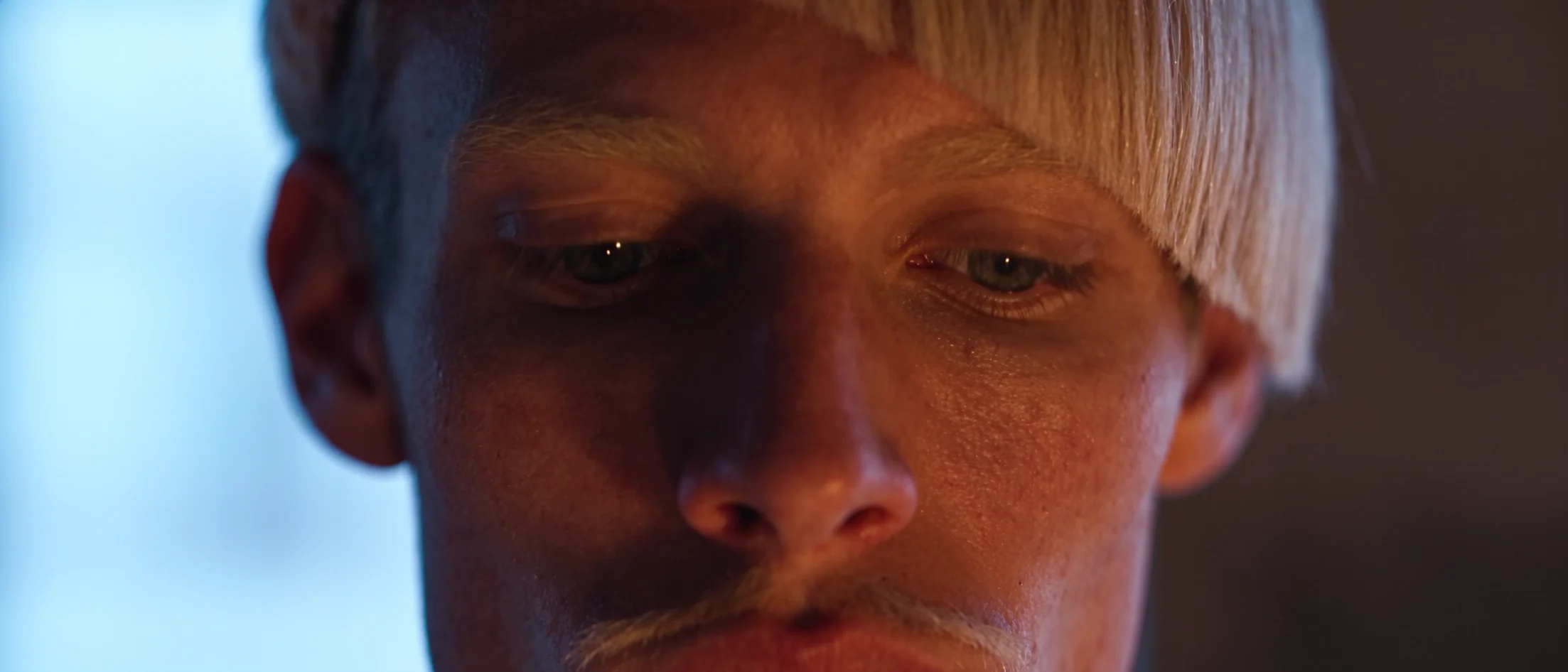
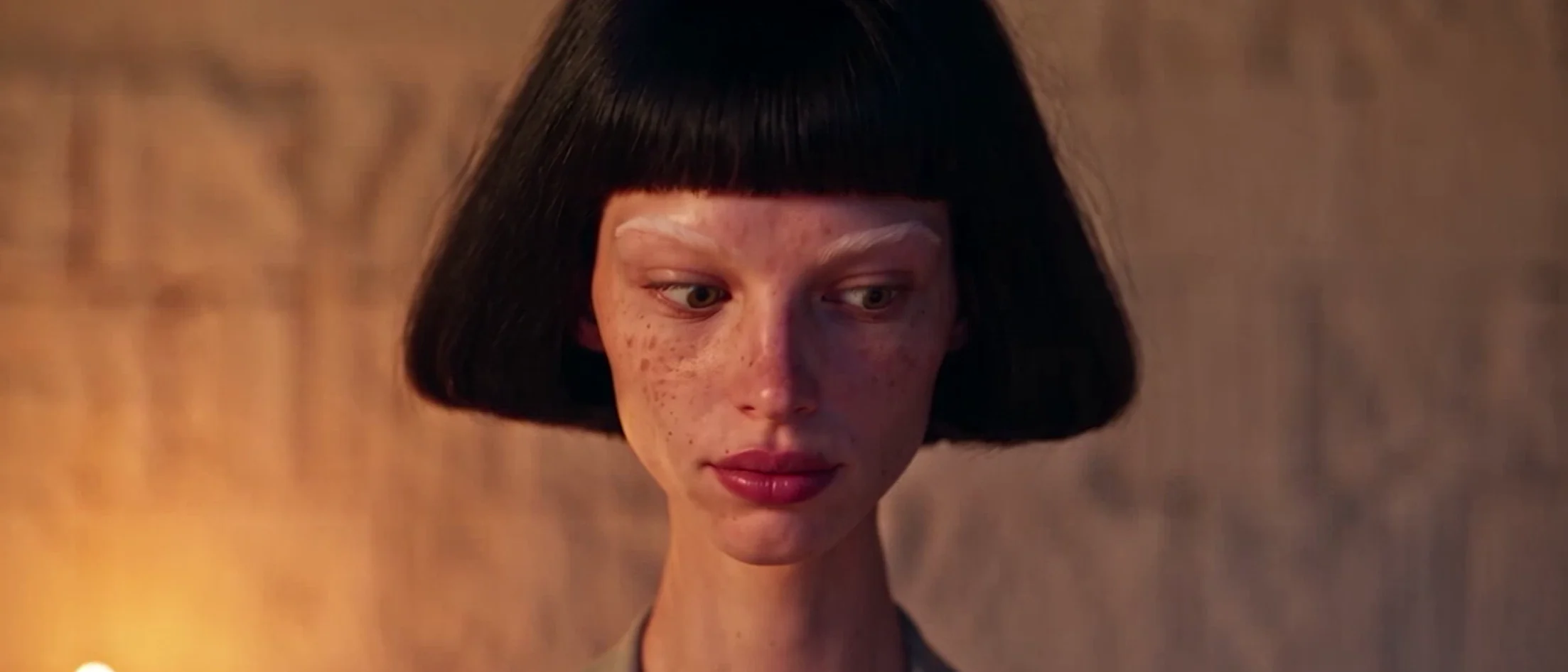
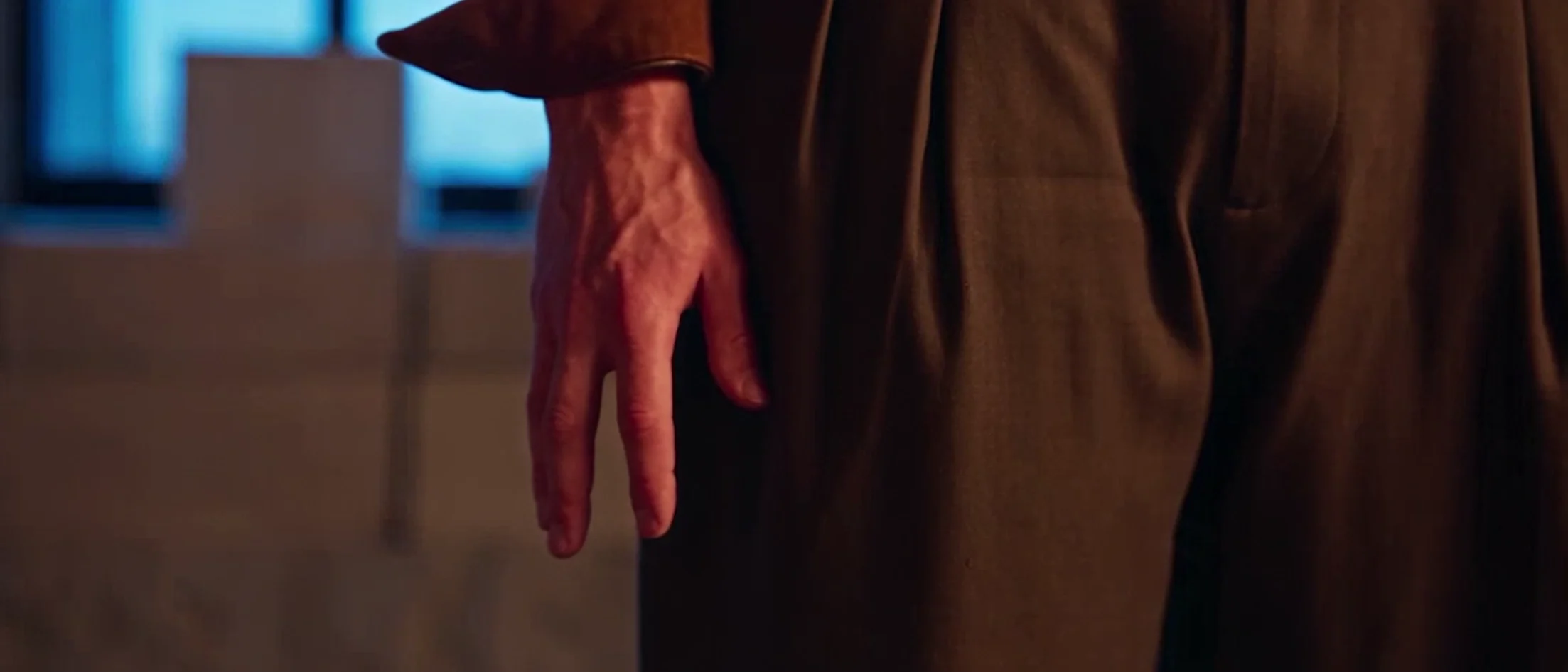
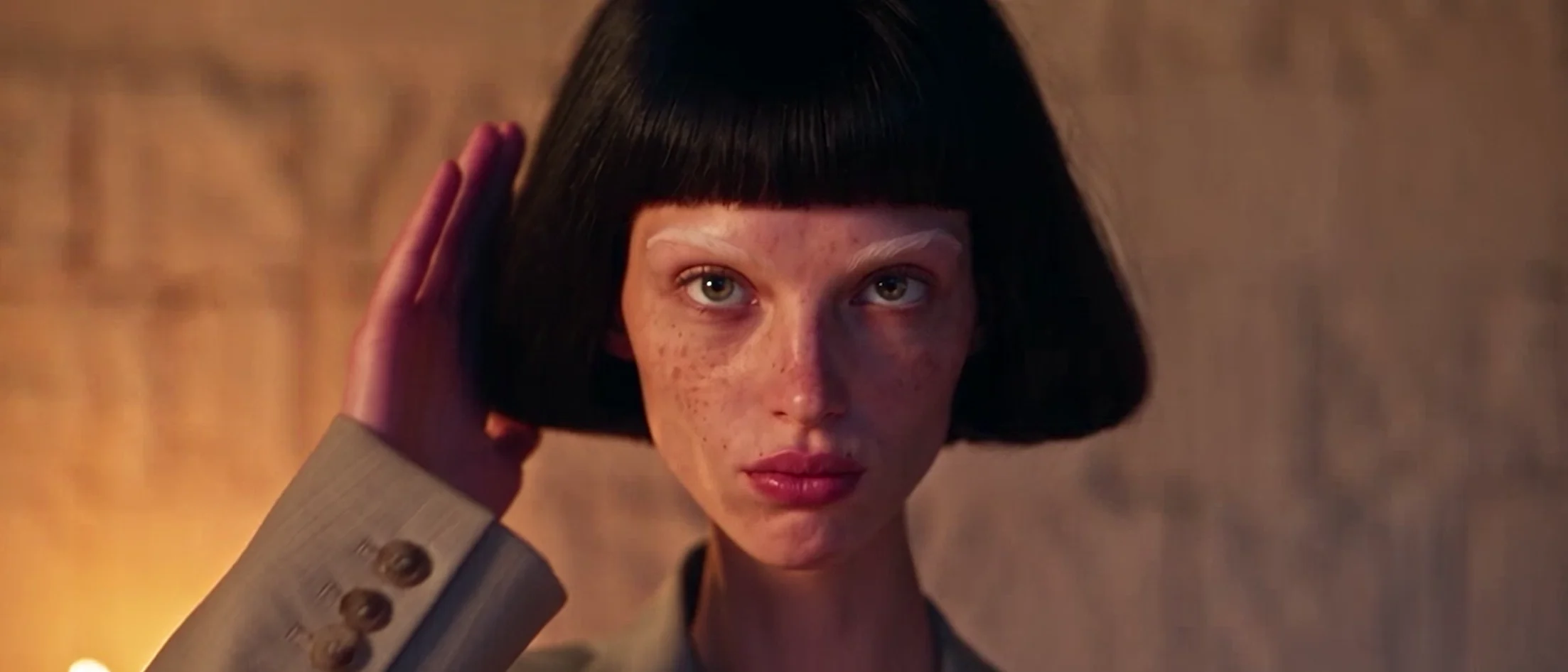
The meeting of eyes sets up the duel, so I built it like a western shootout: a volley of 0.8-second close-ups. Each frame carries one detail, and the rhythm makes the appraising look feel almost physical. The frames come in pairs: him, her.
12
A duel of hobbies: show and react
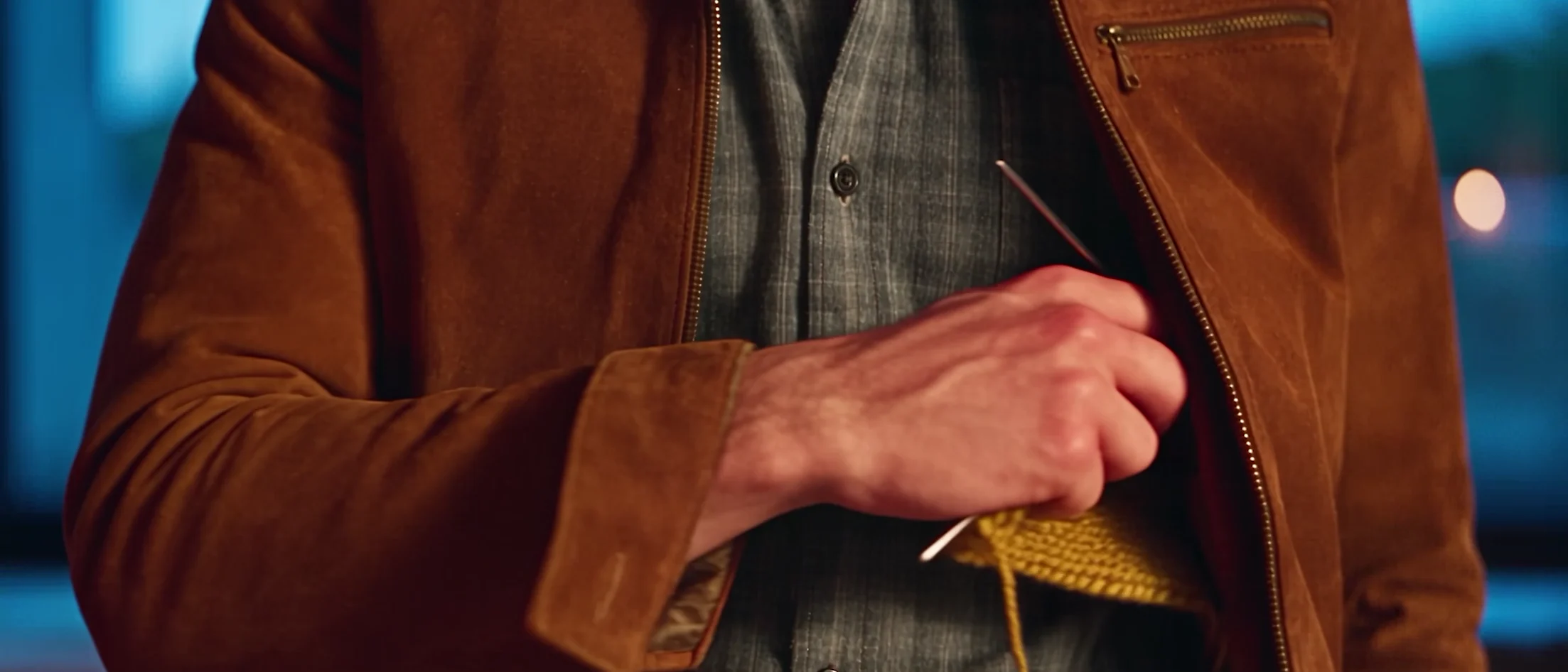
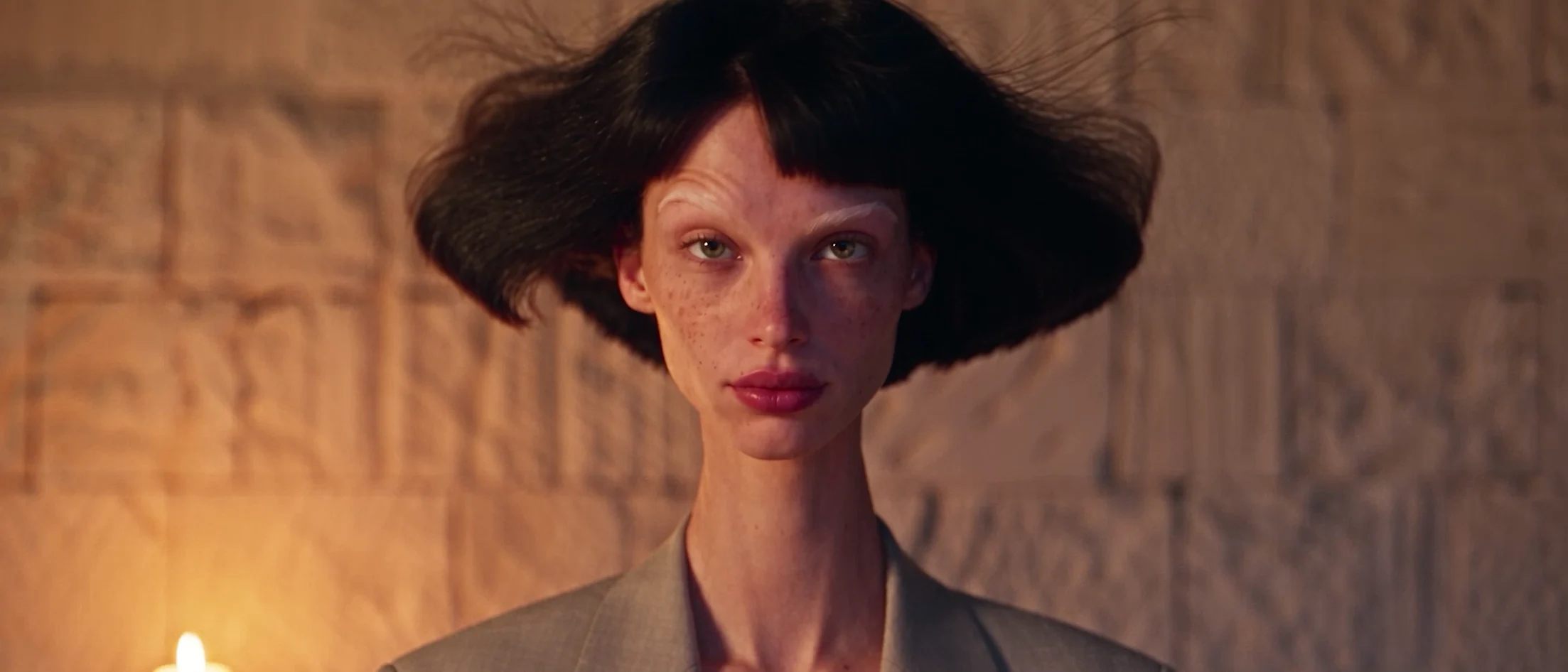
Instead of a fight, a show. One pulls out the object of their hobby, the other answers with a single grimace and pulls out theirs. The object appears straight in the hand: long fiddling with props looks unnatural in generation and eats time. Each reveal hits the opponent with a gust of air, without touching. Left, the reveal; right, the reaction.
13
Who doesn’t fit in here
At the height of the duel time freezes: napkins and paper cranes hang in the air, and a man who clearly doesn’t fit in walks through the hall at normal speed, in a hoodie, with a phone. The doorman at the entrance sees that someone has walked past him.
14
Edit and sound by hand
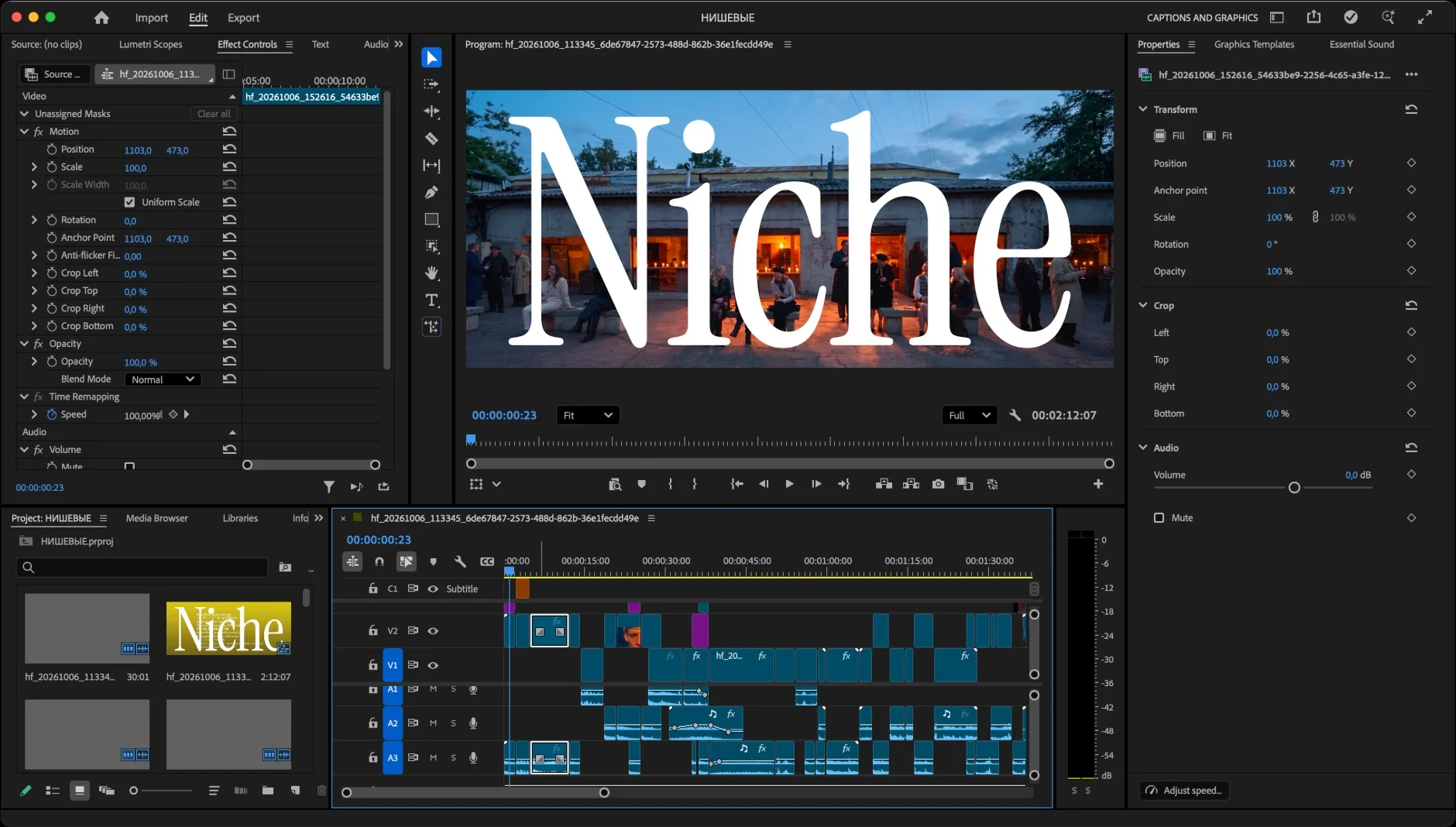
Generation gives you material; the film happens in the edit. In Premiere Pro I cut the Seedance blocks into shots and built the rhythm, cut and mixed the sound separately, and added the titles. There’s no color grade: the single evening and its light were built into the locations, so the Seedance footage came together without grading.
Team
- Idea, characters, generation, edit
- Alex Nikulin